
Table of Contents
- Why Electrical Fire Hazards Matter in Canadian Homes
- Burning Odors and Scorched Outlets
- Flickering, Dimming, and Unstable Lights
- Hot Switch Plates and Warm Outlets
- Sparks, Arcing, and Buzzing Sounds
- Common Causes of Residential Electrical Fires
- When to Call an ESA Licensed Electrician
- Electrical Safety Inspection Cost in Canada
Last Updated: August 10, 2026
Why Electrical Fire Hazards Matter in Canadian Homes
Electrical fires often start hidden inside walls, within appliances, or behind outlets, places homeowners can’t see until it’s too late. A small electrical fault today can become a catastrophic fire tomorrow.
At P3 MECHANICAL & ELECTRICAL, we’ve helped hundreds of Vancouver Island homeowners identify and address electrical fire hazards before they become emergencies. The good news is that most electrical fires are preventable. Your home gives you warning signs, sometimes subtle, sometimes unmistakable. Learning to recognize these signs is one of the most important safety investments you can make.
This guide covers the seven most common warning signs that your home’s electrical system is in trouble, what each means, why it’s dangerous, and what you should do. Some issues you can monitor yourself; others demand immediate professional attention from a licensed electrician.
Burning Odors and Scorched Outlets
A burning smell near an outlet or electrical panel is never normal. This is one of the earliest and most reliable warning signs that something is seriously wrong.
What you’re smelling is insulation breaking down. Electrical wires are wrapped in plastic or rubber insulation designed to contain heat and prevent short circuits. When that insulation overheats, it melts and releases a distinctive smell, often described as burning plastic or acrid and chemical. If you smell this near an outlet, switch, or your electrical panel, stop using that circuit immediately.
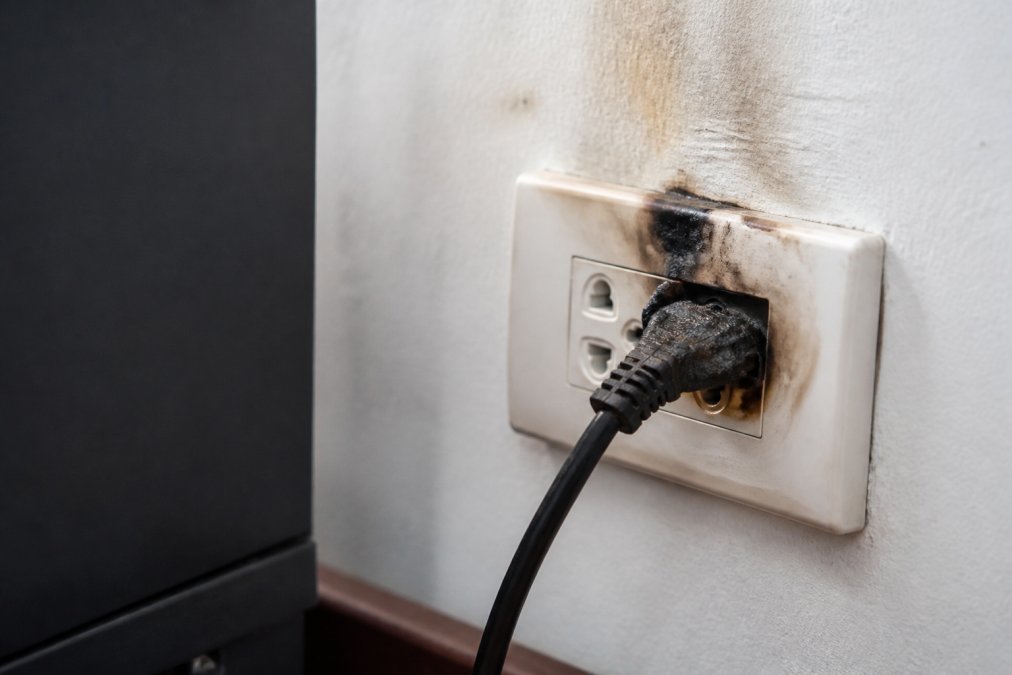
Scorched or discolored outlets are the visual counterpart to this warning sign. Look for dark marks, charring, or burn patterns around outlet faces or on the wall surrounding them. These marks indicate that heat has been escaping from inside the outlet, a sign that wiring connections are failing or arcing is occurring.
The underlying problem, loose connections, damaged insulation, or a faulty appliance cord, continues to generate heat. Each time you use that outlet, you’re allowing current to flow through a compromised connection, creating more heat and pushing the system closer to ignition.
If you detect burning odors or scorched outlets, turn off the breaker that controls that outlet and leave it off. Call a licensed electrician immediately. This is not a "monitor and see" situation.
A burning smell near electrical equipment is a fire hazard indicator. Continuing to use the outlet after detecting this smell dramatically increases the risk of electrical fire. Do not delay professional inspection.
Flickering, Dimming, and Unstable Lights
Lights that flicker, dim unexpectedly, or behave inconsistently are often dismissed as minor annoyances. In reality, they’re frequently the first sign that your electrical system is struggling.
Flickering lights typically indicate a loose connection somewhere in your home’s electrical circuit. When a connection is loose, resistance increases. Electricity has to work harder to flow through, generating heat. As the connection heats up, it may momentarily break, causing the light to flicker. When it cools slightly, the connection re-establishes.
This cycle, heating, breaking, cooling, reconnecting, is extremely dangerous. Each break in the circuit creates a tiny arc (a spark jumping across the gap). Repeated arcing generates intense heat capable of igniting nearby materials like wood framing, insulation, or drywall.
Dimming lights that occur when you turn on a high-power appliance (like a dishwasher, electric oven, or clothes dryer) suggest voltage drop, indicating that your home’s electrical panel may be overloaded or that wiring is undersized for the load. Over time, an overloaded circuit generates excessive heat.
If flickering is isolated to one room or one circuit, the problem is likely in that circuit. If it affects multiple rooms or the entire home, the issue may be in your main electrical panel or the service connection from the utility. Either way, professional diagnosis is essential.
Hot Switch Plates and Warm Outlets

Switch plates and outlet covers should be cool to the touch at all times. If they’re warm or hot, current is flowing through a connection that’s generating excessive heat.
A warm outlet typically means the connection inside the outlet box is loose or corroded. Electrical current meeting resistance generates heat. A proper connection minimizes resistance. A loose or corroded connection creates significant resistance, turning electrical energy into heat instead of allowing current to flow freely.
Hot switch plates are equally concerning. They suggest that the wiring behind the switch is overheating, due to a loose connection at the switch terminals, undersized wiring for the load being switched, or a failing switch mechanism.
A warm outlet today doesn’t mean a fire tomorrow, but continued operation of a loose or corroded connection causes progressive damage to the insulation surrounding the wire. Over weeks or months, that insulation degrades. Eventually, it fails completely, and the bare wire touches something conductive, metal framing, water, another wire, creating a short circuit and a spark.
To check your outlets and switches safely: touch the cover plate with the back of your hand. If it feels noticeably warm compared to other outlets in your home, that’s abnormal. A warm outlet carrying a normal load (a lamp, a phone charger) should never be warm. Stop using that outlet and have it inspected.
Sparks, Arcing, and Buzzing Sounds
Sparks or visible arcing at an outlet are unmistakable danger signals. If you see a spark when plugging something in, or if you notice arcing (a blue or white electrical spark jumping inside an outlet), that’s a fire hazard in its active state.
Arcing occurs when electrical current jumps across a gap it shouldn’t cross. This happens when connections are loose, when contacts inside an outlet are worn or corroded, or when insulation has degraded. The arc generates extreme heat, hot enough to ignite nearby materials almost instantly.
A buzzing or sizzling sound coming from an outlet, switch, or the electrical panel is also a sign of arcing or loose connections. The sound is the electrical current trying to force its way across a gap, or vibrating at high frequency as it flows through a corroded connection.
If you see sparks or arcing, do not use that outlet. Turn off the breaker controlling that outlet and call a licensed electrician. Buzzing sounds from the electrical panel itself are more serious, suggesting a problem at the main service level. Call a professional immediately.
Visible sparks or arcing are active electrical fire hazards. Continuing to use the outlet or switch increases the immediate risk of ignition. Do not delay calling a licensed electrician.
Common Causes of Residential Electrical Fires
Understanding what causes electrical fires helps you recognize patterns in your home and take preventive action.
Loose connections are the single most common cause of residential electrical fires. Connections loosen over time due to thermal cycling (heating and cooling), vibration from appliances, or poor installation. A loose connection creates resistance, generates heat, and eventually fails. Older homes are at higher risk due to decades of thermal cycling gradually loosening connections throughout the system.
Faulty or old wiring is the second major cause. Wiring insulation degrades over time, especially in hot environments. Once insulation fails, bare wires can touch each other, touch metal framing, or contact moisture, creating short circuits. Homes with knob-and-tube wiring (common before the 1950s) or aluminum wiring (common in the 1960s-70s) are at elevated risk.
Overloaded circuits force more current through wiring than it’s designed to handle, generating heat throughout the circuit. Over time, this heat degrades insulation. Many older homes have insufficient panel capacity for modern electrical loads.
Faulty appliances and damaged cords also contribute significantly. A damaged appliance cord can short internally, creating heat and sparks inside the cord itself.
Ground faults occur when current leaks from the main circuit to ground through an unintended path, such as when water contacts a live wire or insulation fails. Ground faults can generate heat and sparks before a breaker trips.
Arcing from loose connections, corroded contacts, or damaged insulation creates intense localized heat capable of igniting nearby materials.
Most residential electrical fires are caused by loose connections, old wiring, or overloaded circuits, all preventable or detectable with regular inspection. Professional maintenance catches these problems before they become fires.
When to Call a Licensed Electrician

Not every electrical concern requires immediate emergency response, but some do.
Call immediately (same day, or after-hours emergency service):
- You see sparks or arcing at an outlet or switch
- You smell burning plastic or rubber near electrical equipment
- A switch plate or outlet is hot to the touch
- You hear buzzing or sizzling from the electrical panel
- You notice scorched or charred marks around an outlet or on the wall
- Lights flicker frequently, especially when you use appliances
Call within 24 hours:
- An outlet is warm (noticeably warmer than others)
- Lights dim when you turn on a major appliance
- You have frequent circuit breaker tripping (more than once per week)
- You notice discoloration around outlets
Schedule an inspection soon (within a week or two):
- Your home is more than 40 years old and has never had a professional electrical inspection
- You’ve experienced any of the warning signs above, even if they’ve resolved
- You’re planning major renovations or adding significant electrical load
- You want to assess your home’s readiness for electric vehicle charging or heat pump installation
A licensed electrician has the training and tools to diagnose electrical problems safely, using specialized equipment like circuit analyzers, non-contact voltage testers, and thermal imaging.
P3 MECHANICAL & ELECTRICAL employs certified technicians trained to recognize electrical fire hazards and address them before they become emergencies. We serve residential and commercial properties across Nanaimo and Vancouver Island, offering fast response times and comprehensive electrical safety assessments.
When you call an electrician, describe the warning signs you’ve noticed. If you’ve seen sparks, smelled burning, or felt heat, say so immediately, this helps the technician prioritize your call. If possible, note which circuits or outlets are affected and when the problem occurs.
Electrical Safety Inspection Cost in Canada
The cost of an electrical safety inspection varies depending on the scope of work and your location. A basic inspection to identify obvious hazards typically costs less than a comprehensive assessment that includes testing circuits, checking connections, and using thermal imaging.
Pricing depends on the size of your home, the age of your electrical system, whether you want a visual inspection only or detailed testing, and the complexity of your panel layout. For specific pricing, contact a licensed electrician directly and describe what you need assessed.
When comparing quotes, remember that the cheapest inspection isn’t always the best value. An inspector who uses thermal imaging or circuit analysis tools will catch problems that a visual-only inspection might miss. Ask what testing methods the electrician will use and what the inspection includes.
If you’re concerned about electrical fire hazards in your home, P3 MECHANICAL & ELECTRICAL can assess your system and provide recommendations. We’re available for consultations across Nanaimo and Vancouver Island.
Electrical fire hazards are preventable when you know what to look for. A burning smell, hot outlets, flickering lights, or strange sounds from your electrical system are all reasons to investigate. Many warning signs can be monitored by homeowners, but any sign of active danger, sparks, arcing, or burning odors, demands immediate professional attention.
Don’t wait for a close call or a small fire to take electrical safety seriously. If you’ve noticed any of the warning signs covered in this guide, contact a licensed electrician. P3 MECHANICAL & ELECTRICAL offers fast, professional electrical assessments and repairs designed to keep your home safe and your systems compliant with Canadian building codes. Learn more about electrical safety from Electrical Safety Authority and get a quote for a comprehensive safety inspection today.
Frequently Asked Questions
Can you smell an electrical fire before it starts?
Yes. A burning plastic or rubber smell is often the first warning sign of an electrical fire hazard. This odor typically comes from overheated wiring insulation or burning components inside walls or outlets. If you detect this smell, stop using affected circuits immediately and contact an ESA licensed electrician. Don't ignore it or assume it will resolve on its own, this is a critical safety signal that electrical systems are overheating and pose fire risk.
What are the most common causes of residential electrical fires?
Residential electrical fires typically result from faulty wiring, overloaded circuits, loose connections, and aging electrical panels that cannot handle modern appliance loads. Damaged appliance cords, ground faults, and short circuits are also major contributors. Homes with outdated wiring insulation or panels over 25-30 years old face higher risk. Professional inspections can identify these hazards before they ignite. Preventative maintenance and prompt repairs of any warning signs significantly reduce fire risk.
How much does an electrical safety inspection cost in Canada?
Electrical safety inspection costs in Canada typically range from $300 to $500 CAD, depending on your home's size, panel age, and complexity. Some inspectors charge hourly rates (around $100-150 per hour). Thermal imaging inspections that detect hidden hot spots may cost more. Prices vary by province and service provider. Contact P3 Mechanical & Electrical for a quote tailored to your property's specific needs and location on Vancouver Island.
Are flickering lights a sign of an electrical fire hazard?
Flickering or dimming lights can indicate loose connections, voltage drops, or overloaded circuits, all potential fire hazards. While not every flicker signals immediate danger, consistent flickering suggests electrical stress. Combined with other warning signs like warm outlets or burning smells, flickering lights warrant immediate professional inspection. A licensed electrician can diagnose whether the issue is minor or a serious fire risk requiring urgent repairs.
This article was written using GrandRanker
Leave a Reply