
Table of Contents
- What Is a Heat Pump and How Does It Compare to Gas Furnaces?
- Energy Efficiency Ratings Explained: AFUE, SEER2, and HSPF2
- Top Energy Efficient Heating Systems for 2026
- Hybrid Heating Systems for Cold Climate Performance
- HVAC Maintenance Tips for Efficiency and Longevity
- Canada Greener Homes Grant Eligibility and Rebates
- Smart Thermostat Integration for Better Energy Savings
- Conclusion
Last Updated: August 23, 2026
What Is a Heat Pump and How Does It Compare to Gas Furnaces?
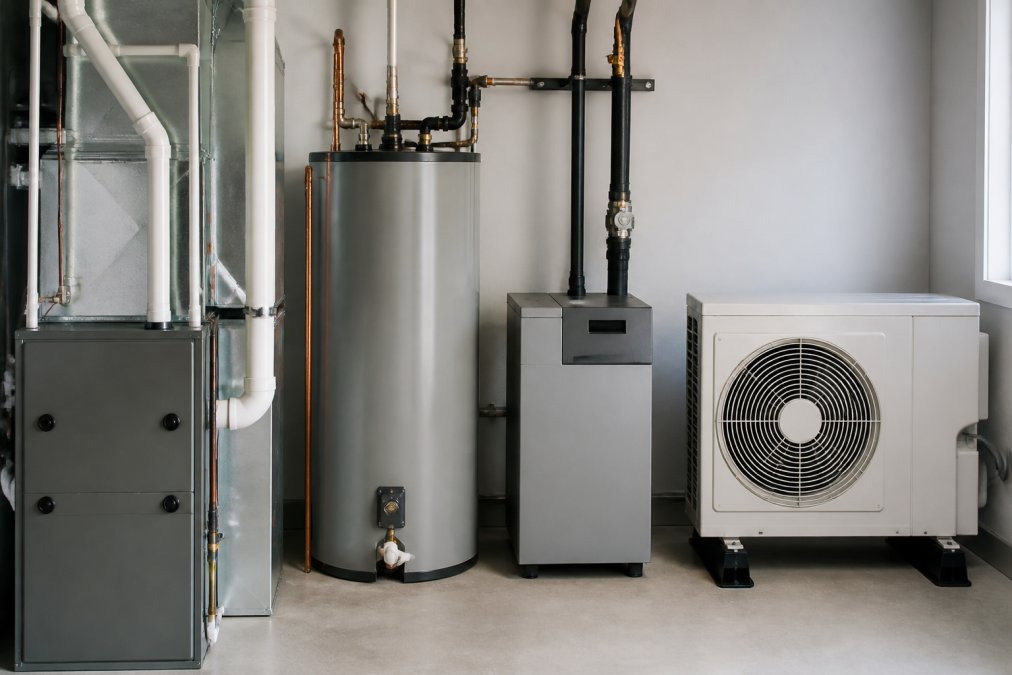
A heat pump transfers heat from outside air, ground, or water into your home during winter, then reverses the process to cool during summer. Unlike gas furnaces that generate heat by burning fuel, heat pumps move existing thermal energy, making them fundamentally more efficient at moderate temperatures.
Gas furnaces convert fuel into heat at 90-99% AFUE (Annual Fuel use Efficiency) ([EXTERNAL_LINK: Natural Resources Canada | nrcan.gc.ca]). Heat pumps, measured by HSPF2 (Heating Seasonal Performance Factor), deliver 2-4 units of heat for every unit of electrical energy consumed, roughly half the operational cost of a gas furnace in mild climates ([EXTERNAL_LINK: ENERGY STAR Canada | energystar.gc.ca]). Gas furnaces excel in extreme cold, while heat pumps struggle below freezing. Hybrid heating systems, pairing a heat pump with a gas furnace, have become popular in colder regions, automatically switching when temperatures fall below the heat pump’s effective range.
If you’re considering either system, P3 MECHANICAL & ELECTRICAL can assess your home’s heating load and climate zone to recommend the right fit. Our certified technicians analyze insulation, ductwork condition, and outdoor temperature patterns to guide your investment.
Energy Efficiency Ratings Explained: AFUE, SEER2, and HSPF2
Understanding efficiency ratings is essential to comparing heating systems accurately. These metrics don’t measure the same thing, so comparing a furnace’s AFUE directly to a heat pump’s HSPF2 will mislead you.
AFUE (Annual Fuel use Efficiency) measures what percentage of fuel energy a furnace converts to usable heat. A furnace rated at 95% AFUE wastes only 5% of its fuel. Most older furnaces operate around 80-85% AFUE, meaning upgrading to a high-efficiency model can reduce heating costs by 10-15% annually.
HSPF2 (Heating Seasonal Performance Factor) measures how much heating a heat pump delivers per unit of electricity consumed over an entire heating season. An HSPF2 of 8.0 means the system delivers eight units of heat for every unit of electrical energy used.
SEER2 (Seasonal Energy Efficiency Ratio) measures cooling efficiency using the same ratio approach as HSPF2. When comparing heat pumps, look for both HSPF2 (heating) and SEER2 (cooling) ratings.
The practical takeaway: AFUE ratings above 95% represent minimal efficiency gains over 90-92% models, but the cost difference is significant. For heat pumps, HSPF2 above 8.0 indicates premium performance.
| Efficiency Rating | What It Measures | Typical Range | Best-in-Class |
|---|---|---|---|
| AFUE | Gas furnace heat conversion | 80-99% | 99% (Lennox SLP99V) |
| HSPF2 | Heat pump heating efficiency | 6.0-8.8 | 8.8 (Daikin Fit) |
| SEER2 | Heat pump cooling efficiency | 13-24 | 19+ (premium models) |
Top Energy Efficient Heating Systems for 2026
1. P3 MECHANICAL & ELECTRICAL, Expert Energy Efficient Heating Solutions
P3 MECHANICAL & ELECTRICAL delivers certified installation and maintenance of the most efficient heating systems available, helping homeowners and businesses reduce utility costs through strategic upgrades. Our team assesses your current system, climate zone, and budget to recommend the right energy efficient heating system, whether that’s a high-efficiency furnace, heat pump, hybrid setup, or condensing boiler.
What sets P3 MECHANICAL & ELECTRICAL apart is our proactive approach to system longevity. We establish maintenance programs that keep your system running at peak efficiency. Our certified technicians understand how coastal humidity and salt air on Vancouver Island affect equipment performance, ensuring your investment lasts longer. For homeowners concerned about upfront costs, we guide you through available rebates and grants, including the Canada Greener Homes Grant.
Homeowners and property managers on Vancouver Island who want expert guidance selecting the right energy efficient heating system, professional installation that meets code, and ongoing maintenance to maximize system life and efficiency.
2. Lennox SLP99V Gas Furnace, Maximum AFUE Efficiency
The Lennox SLP99V reaches 99% AFUE, the highest efficiency rating available in residential gas furnaces. This modulating furnace adjusts its burner output in increments as small as 1%, delivering precise temperature control and eliminating temperature swings common with single-stage furnaces. The variable-speed ECM blower motor maintains consistent airflow throughout your home.
Installation typically ranges from C$6,950 to C$8,300 for the unit, with total installed costs potentially reaching C$12,000 or more depending on factors like labor and additional components. The efficiency gains over a 95% AFUE furnace translate to roughly C$200-300 annual savings, meaning payback takes 30+ years. It’s the right choice if you’re staying long-term, prioritize comfort, or have a larger home.
Pros:
- Highest AFUE rating ensures lowest operating costs among gas furnaces
- Modulating burner and variable-speed blower provide superior comfort
- Extremely quiet operation
- Dual-fuel compatibility for future heat pump integration
Cons:
- High upfront installation cost
- Efficiency gains over 95% AFUE models are marginal
- Requires professional installation
3. Daikin Fit Heat Pump, Space-Saving Performance
The Daikin Fit solves a common problem: homeowners with limited outdoor space who want a modern heat pump. Its slim, side-discharge outdoor unit requires minimal wall clearance, fitting in tight yards where standard heat pumps won’t fit.
Performance doesn’t suffer for the compact design. The Daikin Fit achieves SEER2 ratings up to 19 and HSPF2 up to 8.8, placing it among the most efficient heat pumps available. The variable-speed swing compressor adjusts output smoothly, maintaining consistent temperatures and reducing energy waste. Cold-climate models perform effectively even when outdoor temperatures drop.
Installation costs for a Daikin Fit system typically range from C$6,500 to C$16,500, including equipment and installation. The limitation is heating performance in extreme cold. Below -10°C, most heat pumps require supplemental electric heating, which increases operating costs.
Pros:
- Compact outdoor unit fits tight spaces
- High SEER2 and HSPF2 ratings deliver strong energy savings
- Reuses existing ductwork, simplifying installation
- Cold-climate model available for colder regions
Cons:
- Performance degrades significantly below freezing
- Installation costs vary widely based on home complexity
- Requires professional installation for warranty coverage

4. Carrier Infinity 24 Heat Pump, Premium Efficiency and Comfort
The Carrier Infinity 24 delivers up to 24 SEER and 13 HSPF for exceptional energy efficiency, paired with Greenspeed Intelligence technology that adjusts output between 40% and 100% capacity. This modulation maintains consistent temperatures with minimal swings and operates quietly, as low as 69 dBA.
Installation costs for the Carrier Infinity 24 Heat Pump typically range from C$12,000 to C$18,000, including installation. The efficiency gains over a mid-tier heat pump are modest, roughly 10-15% better SEER2 rating. For most homeowners, the Carrier Infinity 24 is ideal only if you’re in a large home, prioritize whisper-quiet operation, or plan to stay 20+ years.
Pros:
- Highest efficiency ratings available for residential heat pumps
- Exceptional comfort with precise modulation
- Ultra-quiet operation
Cons:
- Premium installation cost
- Efficiency gains over mid-tier models are incremental
- Overkill for smaller homes or moderate climates
5. Bosch Greenstar Combi-Boiler, Condensing Efficiency
The Bosch Greenstar is a wall-mounted gas condensing boiler that delivers both space heating and domestic hot water from one compact unit. AFUE ratings reach 95%, and the condensing design captures heat from exhaust gases that conventional boilers waste. This system shines in homes with radiant floor heating or baseboard heating systems that don’t require forced-air ductwork.
Installation complexity and cost are the tradeoffs. Condensing boilers require special venting and drain lines for condensate. Retrofitting into homes with existing gravity-fed hot water systems can be expensive. Pricing for Bosch Greenstar combi-boilers can range from approximately C$3,980 to C$4,938 for the unit.
Pros:
- Combines heating and hot water in one efficient unit
- High AFUE rating (95%) reduces operating costs
- Extremely quiet operation
- Compact wall-mounted design saves space
Cons:
- Installation complexity increases cost
- Requires special condensing venting and drainage
- Not ideal for retrofits into homes with existing gravity-fed systems
6. Trane XV20i, Variable-Speed Reliability
The Trane XV20i delivers up to 20.5 SEER2 and 8.7 HSPF2, placing it in the high-efficiency category without premium flagship pricing. Variable-speed compressor, outdoor fan, and indoor fan work together to modulate output smoothly, maintaining consistent comfort. Trane builds these systems for durability with strong components designed for long-term reliability.
Installation costs for the Trane XV20i can range from C$13,000 to C$18,000+. Where the Trane wins is reliability reputation and slightly lower pricing for comparable performance.
Pros:
- High SEER2 and HSPF2 ratings with proven reliability
- Variable-speed operation provides consistent comfort
- Smart thermostat integration available
- Durable construction and long component lifespan
Cons:
- High installation cost
- Efficiency gains over mid-tier models are incremental
Hybrid Heating Systems for Cold Climate Performance
Hybrid heating pairs a heat pump with a gas furnace, automatically switching based on outdoor temperature. When conditions are mild, the heat pump operates at low cost. When temperatures drop below the heat pump’s effective range (typically around -10°C), the furnace takes over, ensuring reliable heat in harsh winters.
This approach optimizes for efficiency during 80% of the heating season when temperatures are moderate, then switches to reliable gas heat during brief cold snaps. Over a full heating season, hybrid systems typically cost 20-30% less to operate than gas furnaces alone ([EXTERNAL_LINK: Natural Resources Canada | nrcan.gc.ca]). Initial cost is higher, expect pricing to depend on the specific system and installation complexity. However, operational savings over 15+ years often justify the premium investment for homeowners planning to stay long-term.
The Canada Greener Homes Grant recognizes hybrid systems as energy-efficient upgrades and may offset a portion of installation costs. P3 MECHANICAL & ELECTRICAL can assess whether a hybrid system qualifies for available rebates and guide you through the application process.
HVAC Maintenance Tips for Efficiency and Longevity
Regular maintenance is the single most effective way to keep your energy efficient heating system operating at peak performance. A well-maintained system runs 15-20% more efficiently than one neglected over years, directly offsetting maintenance costs through lower utility bills.
Monthly tasks: Change or clean your furnace or heat pump filter monthly during heating season. A clogged filter forces your system to work harder, reducing efficiency and increasing strain on components.
Seasonal tasks: Before winter, have your furnace or heat pump inspected by a certified technician. They’ll check refrigerant levels (for heat pumps), clean burner components (for furnaces), test safety controls, and verify proper airflow.
Annual tasks: Schedule professional maintenance once per year, ideally before your peak heating or cooling season. A technician will perform a comprehensive system check, clean internal components, verify thermostat calibration, and identify potential issues before they become failures. This investment typically costs C$150-300 and prevents emergency repair calls that cost 3-5 times more.
Neglecting maintenance is the fastest way to reduce your system’s efficiency and lifespan. A furnace that receives annual maintenance lasts 15-20 years. The same furnace neglected often fails by year 10, with efficiency declining 5-10% per year without service.
Canada Greener Homes Grant Eligibility and Rebates
The Canada Greener Homes Grant provided up to C$5,000 in rebates for energy-efficient home upgrades, including heating system replacements, and up to C$600 for EnerGuide assessments. The grant is no longer accepting new applicants as of July 31, 2026. To qualify, your home must have been owner-occupied, and you must have completed an EnerGuide assessment before and after your upgrade.
Eligible upgrades included installing a heat pump for primary or supplemental heating, installing a hybrid heating system, or installing a high-efficiency water heater. Furnaces and boilers were generally not eligible unless for homeowners in northern and off-grid communities. The rebate covered up to C$5,000 for eligible retrofits.
Application required working with a certified contractor who understood program requirements. P3 MECHANICAL & ELECTRICAL is familiar with Canada Greener Homes Grant specifications and can ensure your system qualifies, handle the technical documentation, and help you submit your application.
Smart Thermostat Integration for Better Energy Savings
A smart thermostat amplifies the efficiency gains from your heating system by learning your schedule, adjusting temperatures automatically, and allowing remote control. The ecobee Smart Thermostat Premium, a Canadian company product, is purpose-built for Canadian homes and works seamlessly with most energy efficient heating systems.
The ecobee Premium includes a SmartSensor that reads temperature and occupancy in specific rooms, eliminating hot and cold spots. Geofencing technology detects when you leave home and automatically adjusts temperature to save energy, then warms your house before you return. ENERGY STAR certification indicates the ecobee Premium delivers measurable energy savings, typically 8% reduction in heating and cooling costs compared to manual thermostats ([EXTERNAL_LINK: ENERGY STAR Canada | energystar.gc.ca]). For a home spending C$2,000 annually on heating and cooling, that’s C$160 in annual savings. The ecobee Smart Thermostat Premium costs around C$330. A smart thermostat must be combined with another energy efficiency retrofit to be eligible for grants.

Smart thermostats work with forced-air systems (furnaces and central heat pumps). They don’t work with electric baseboard heaters, radiant floor heating, or steam systems. Verify compatibility before purchasing.
Choosing the right energy efficient heating system depends on your climate, home size, budget, and long-term plans. Gas furnaces deliver reliable heat at lower upfront cost but higher operating expenses. Heat pumps excel at efficiency in moderate climates but struggle in extreme cold. Hybrid systems combine both for year-round optimization. Condensing boilers suit homes with radiant heating.
The best choice requires professional assessment of your home’s heating load, insulation, existing infrastructure, and climate zone. P3 MECHANICAL & ELECTRICAL can evaluate these factors, recommend the system that balances efficiency, comfort, and cost for your specific needs, handle professional installation to code standards, and establish a maintenance program to keep your system running at peak efficiency for decades. Contact P3 MECHANICAL & ELECTRICAL for a consultation and quote on energy efficient heating system upgrades tailored to your home.
=== FAQ ANSWERS (audit these too, same rules) ===
[1] Q: What is the most energy efficient type of heating system for a home?
A: Heat pumps are among the most energy efficient heating systems available, achieving COP ratings of 3 to 4 or higher, meaning they deliver 3-4 units of heat for every unit of electricity consumed. High-efficiency gas furnaces with AFUE ratings of 95% or higher also deliver exceptional performance. The best choice depends on your fuel source, climate, and existing infrastructure. Heat pumps excel in moderate climates and offer both heating and cooling, while condensing gas furnaces remain highly efficient in colder regions.
[2] Q: How do high-efficiency furnace vs heat pump systems compare in operational savings?
A: A high-efficiency furnace with 95%+ AFUE converts almost all fuel into usable heat, reducing waste. Heat pumps, however, move existing heat rather than generating it, making them 2-3 times more efficient in terms of energy input to output. Over a heating season, heat pumps typically cost less to operate, but upfront installation is higher. In very cold climates, hybrid systems combining both technologies provide the best balance of efficiency and performance, switching to the furnace when outdoor temperatures drop below the heat pump’s effective range.
[3] Q: What does Canada Greener Homes Grant eligibility require for heating system upgrades?
A: The Canada Greener Homes Grant offered up to C$5,000 in rebates for energy-efficient home upgrades, including heating system replacements, and up to C$600 for the pre- and post-retrofit EnerGuide home energy evaluation. The grant is no longer accepting new applicants as of July 31, 2026. To qualify, your home must have been owner-occupied, and you must have completed a pre- and post-retrofit EnerGuide home energy evaluation. Heat pumps, high-efficiency furnaces (for northern and off-grid communities only), and condensing boilers (for northern and off-grid communities only) typically qualified. You must have obtained a pre-retrofit energy evaluation from a certified auditor, completed the upgrade, and had a post-retrofit evaluation to claim the rebate. Check with your provincial program administrator for specific requirements and eligible equipment models.
[4] Q: How often should I perform HVAC maintenance to keep my system efficient?
A: Schedule HVAC maintenance twice yearly: once before the heating season (fall) and once before the cooling season (spring). Annual inspections include cleaning filters, checking refrigerant levels, inspecting ductwork for leaks, and ensuring all components operate properly. Regular maintenance prevents efficiency losses of 5-15% that occur when systems are neglected. Dirty filters alone can reduce efficiency by up to 15%, so check and replace filters every 1-3 months depending on usage. Professional maintenance extends system lifespan and maintains warranty coverage.
[5] Q: Are heat pumps effective for coastal climates with high humidity and salt air?
A: Heat pumps perform well in coastal climates but require specialized maintenance due to salt air and humidity exposure. Salt corrosion can damage outdoor units, and high humidity may reduce efficiency slightly. Cold-climate heat pump models, such as the Daikin Fit with DH7VS variant, maintain heating capacity even in cooler, damp conditions. Ensure your system includes corrosion-resistant coatings and schedule professional inspections annually to address salt buildup and moisture-related issues. Hybrid systems pairing heat pumps with high-efficiency furnaces provide a reliable backup in extreme conditions.
Frequently Asked Questions
What is the most energy efficient type of heating system for a home?
Heat pumps are among the most energy efficient heating systems available, achieving COP ratings of 3 to 4 or higher, meaning they deliver 3-4 units of heat for every unit of electricity consumed. High-efficiency gas furnaces with AFUE ratings of 95% or higher also deliver exceptional performance. The best choice depends on your fuel source, climate, and existing infrastructure. Heat pumps excel in moderate climates and offer both heating and cooling, while condensing gas furnaces remain highly efficient in colder regions.
How do high-efficiency furnace vs heat pump systems compare in operational savings?
A high-efficiency furnace with 95%+ AFUE converts almost all fuel into usable heat, reducing waste. Heat pumps, however, move existing heat rather than generating it, making them 2-3 times more efficient in terms of energy input to output. Over a heating season, heat pumps typically cost less to operate, but upfront installation is higher. In very cold climates, hybrid systems combining both technologies provide the best balance of efficiency and performance, switching to the furnace when outdoor temperatures drop below the heat pump's effective range.
What does Canada Greener Homes Grant eligibility require for heating system upgrades?
The Canada Greener Homes Grant offered up to C$5,000 in rebates for energy-efficient home upgrades, including heating system replacements, and up to $600 for the pre- and post-retrofit EnerGuide home energy evaluation. The grant is no longer accepting new applicants as of July 31, 2026. To qualify, your home must have been owner-occupied, and you must have completed a pre- and post-retrofit EnerGuide home energy evaluation. Heat pumps, high-efficiency furnaces (for northern and off-grid communities only), and condensing boilers (for northern and off-grid communities only) typically qualified. You must have obtained a pre-retrofit energy evaluation from a certified auditor, completed the upgrade, and had a post-retrofit evaluation to claim the rebate. Check with your provincial program administrator for specific requirements and eligible equipment models.
How often should I perform HVAC maintenance to keep my system efficient?
Schedule HVAC maintenance twice yearly: once before the heating season (fall) and once before the cooling season (spring). Annual inspections include cleaning filters, checking refrigerant levels, inspecting ductwork for leaks, and ensuring all components operate properly. Regular maintenance prevents efficiency losses of 5-15% that occur when systems are neglected. Dirty filters alone can reduce efficiency by up to 15%, so check and replace filters every 1-3 months depending on usage. Professional maintenance extends system lifespan and maintains warranty coverage.
Are heat pumps effective for coastal climates with high humidity and salt air?
Heat pumps perform well in coastal climates but require specialized maintenance due to salt air and humidity exposure. Salt corrosion can damage outdoor units, and high humidity may reduce efficiency slightly. Cold-climate heat pump models, such as the Daikin Fit with DH7VS variant, maintain heating capacity even in cooler, damp conditions. Ensure your system includes corrosion-resistant coatings and schedule professional inspections annually to address salt buildup and moisture-related issues. Hybrid systems pairing heat pumps with high-efficiency furnaces provide a reliable backup in extreme conditions.
This article was written using GrandRanker
Leave a Reply