
Dryer Vent Installation in Nanaimo & Vancouver Island
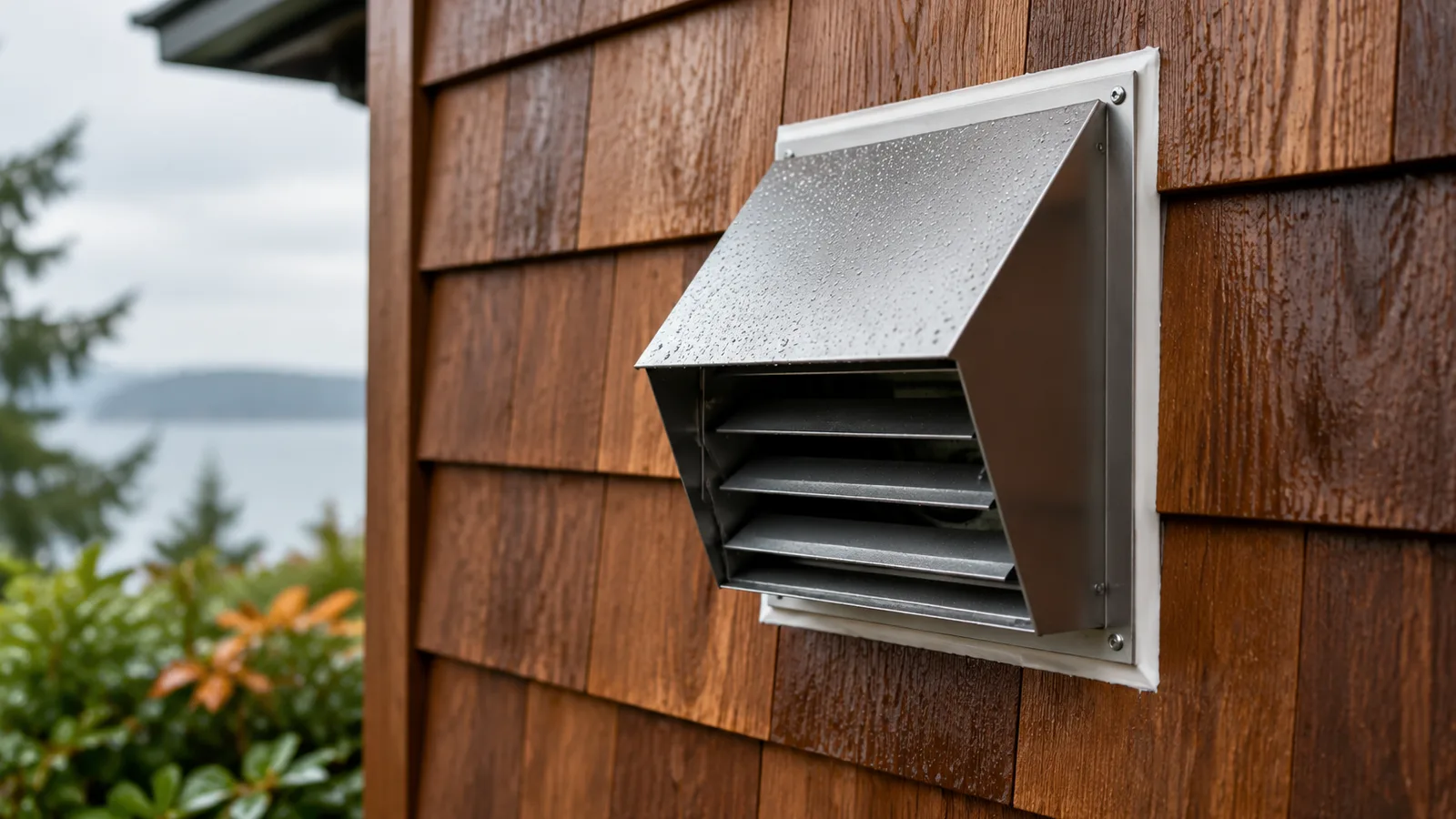
P3 Mechanical & Electrical installs and reroutes dryer vents in rigid metal duct for homes and strata units in Nanaimo and across central Vancouver Island. A new dryer vent installation usually takes half a day, with the length of the route and the wall it exits through doing most of the work on the price — which is why the figure comes from a written quote rather than from this page.
Materials, length, and bends
A dryer vent has one job: carry hot, moist, lint-laden air outside without letting any of it settle on the way. Smooth rigid metal duct does that. The foil and plastic hose most laundry rooms are handed sags, forms ridges lint catches on, and is not rated for it.
Length and bends are the other half. Every elbow costs the equivalent of several feet of straight duct, and the code and the manufacturer both cap what the machine can push against, so a route with three turns can be out of spec even when the tape looks fine.
What's included
- A route planned for the shortest run with the fewest bends
- Smooth-wall rigid metal duct sized to the appliance, replacing foil
- Long-turn elbows where a bend is unavoidable
- Joints sealed with foil tape, and no screws inside for lint to catch on
- An exterior hood with a working damper and no screen to clog
- Core drilling, making good, and airflow measured at the cap
Pricing & what's covered
Free estimate
We price the job after an in-home visit, once someone has seen what's there.
- One-year warranty on our labour. Equipment and parts are covered separately, under the supplier's or manufacturer's own warranty.
- We'll go over licensing and equipment with you at the visit.
How it works
Site assessment — where the duct can go, what it passes through, where it ends.
Route and materials in writing — length, elbows, duct size, and termination.
Installation — duct run and supported, joints taped, hood fitted and flashed.
Verification — airflow measured at the cap, damper checked, old duct removed.
Frequently asked questions
What kind of duct should a dryer vent be made of?
Smooth-wall rigid metal for the run itself. Plastic and thin foil hose sag, trap lint in their ridges, and are not built for exhaust temperatures. A short metal transition behind the machine is normal.
How long can a dryer vent run be?
There is a limit, and elbows eat into it — each bend counts as several feet of straight duct. The allowance comes from the building code together with your dryer manufacturer instructions, so we check it.
Can a dryer vent go through the roof?
It can, and in some townhouses it is the only option. It is not the first choice: a vertical run collects lint at the bottom and a roof cap needs proper flashing. A side wall is better where the layout allows.
Why should the vent cap not have a screen on it?
Lint catches on mesh and blocks it within weeks, turning a pest guard into a blockage. A proper dryer hood uses a hinged damper flap instead: closed against wind and animals, clear when the dryer runs.
How much does a dryer vent installation cost?
We publish no figure for it, because the route decides almost all of it. A straight run through a nearby wall is the cheap end; a long route through finished ceilings, or a roof termination that needs flashing, is the other. Core drilling and making good the opening are part of the quote rather than a surprise at the end of it.
Ready to get it fixed?
Call now, or send us the details online and we'll follow up.