
Fire Protection Services in Nanaimo & Central Vancouver Island
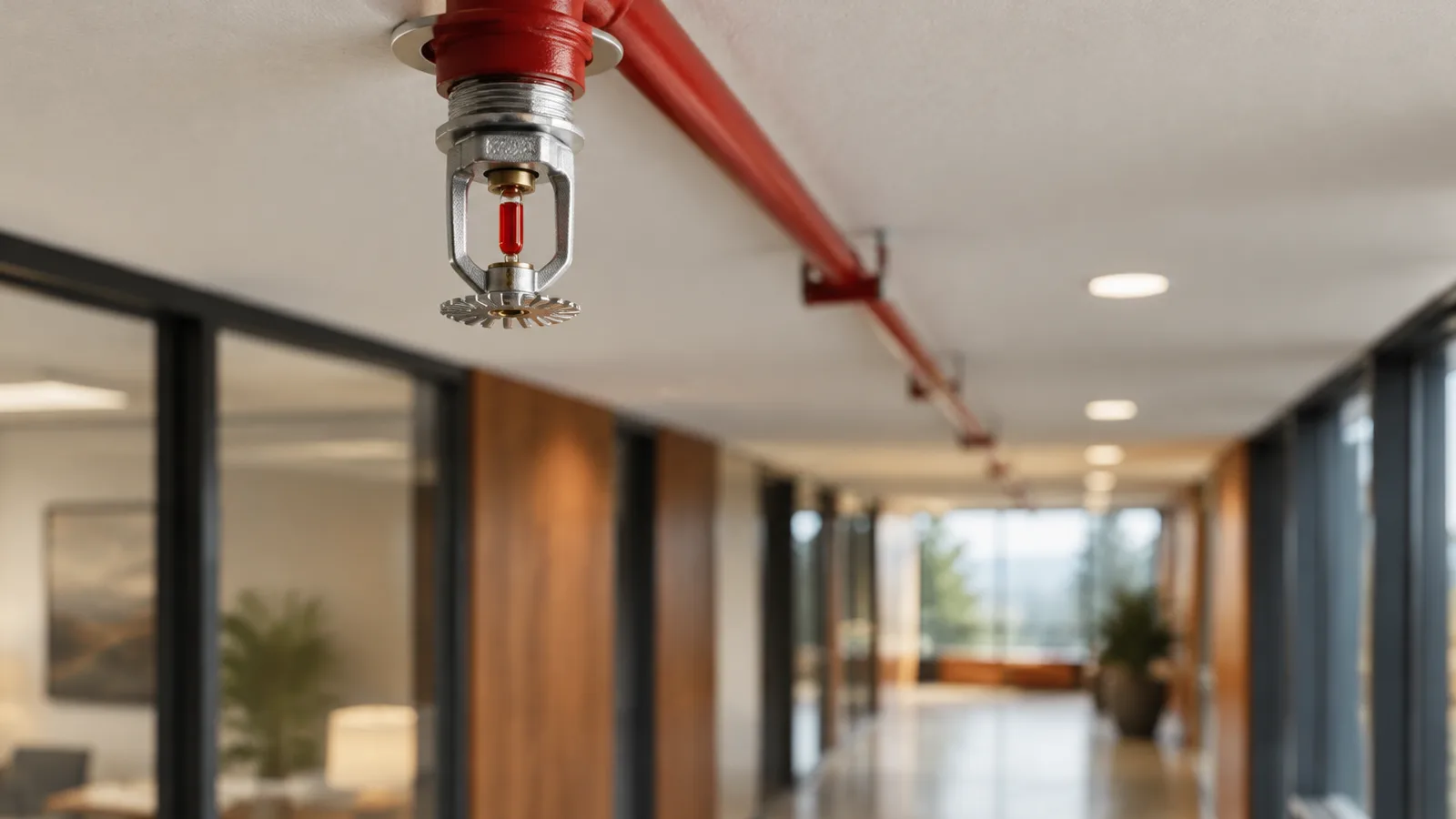
P3 Mechanical & Electrical provides commercial fire protection services across Nanaimo and central Vancouver Island: design, installation, inspection, and repair of sprinkler systems, backflow prevention on the fire line, emergency lighting, exit signs, and portable extinguishers. The work is set up for property managers, strata councils, restaurant owners, and commercial tenants who have to show a municipal fire inspector or an insurer that a building is current. Most of it runs on the annual cycle the BC Fire Code sets, and every job starts with a written scope and a quote.
Fire protection on central Vancouver Island
Fire protection on this part of the Island is a commercial problem before it is a residential one. Nanaimo and the corridor up through Parksville and Qualicum Beach have been filling in with four- and five-storey wood-frame strata buildings that are sprinklered throughout, and the older stock around them — storefronts, restaurants, light-industrial units near Duke Point — was built to whatever code applied at the time and has been renovated into a different use at least once since.
That mix is what makes a building owner’s obligations hard to read off a single document. A tenant improvement can change an occupancy classification, and racking added to a warehouse can change the hazard classification the existing sprinkler design was calculated for. Neither shows up as a broken part; both show up when someone finally compares what is installed against what the building is now used for.
What the BC Fire Code asks of your building
The BC Fire Code requires that a building’s life-safety systems be inspected, tested, and maintained on a fixed schedule, and that the records be kept on the premises. Sprinkler systems, standpipes, and fire pumps follow the intervals in NFPA 25 — frequent gauge and valve checks that building staff can carry out, and an annual inspection with flow and pressure testing. Portable extinguishers need a recorded monthly visual check and an annual service, with internal maintenance at longer intervals depending on type.
Emergency lighting and exit signage sit on their own cadence: a periodic function check and an annual test that proves the batteries carry the load for the full required duration. Commercial kitchens add a hood and duct suppression system that is serviced on a shorter cycle and interlocked to shut down the exhaust fan and the gas supply. Where a sprinkler system draws from the municipal main, the backflow assembly on that line is normally tested annually under the local cross-connection control program, and the report goes to the city.
Salt air, cold parkades, and wet-pipe systems
Two local conditions shorten the life of the hardware. The first is the air: salt carried in off the Strait reaches exposed pipe hangers, valve trim, and the electrical connections on alarm and monitoring gear years before anything inside the building looks aged. The second is temperature. Wet-pipe sprinkler systems run through unheated parkades, loading bays, and exterior stair towers that sit a few degrees off freezing for weeks at a stretch, and a wet line in that position is a burst pipe waiting for one cold night.
A frozen sprinkler line does not fail quietly — it fails as water damage across the units below it, with the system out of service until it is repaired. Dry systems, antifreeze loops, and heat tracing all solve it; which one applies depends on how the space is built and what the original design assumed. It is worth settling before a cold snap rather than during the insurance claim that follows one.
Restaurants, strata buildings, warehouses, schools
Restaurants carry the densest requirements per square foot: hood suppression, Class K extinguishers, clear egress, and a make-up air unit that has to keep replacing what the hood pulls out. Strata buildings carry the most paperwork, because the equipment is split between common property and the strata lot and a council has to approve the repair at a meeting, from a scope written clearly enough to survive that meeting. Warehouses and light industrial turn on storage height and contents. Schools and other institutional buildings mostly turn on scheduling — the work has to land when the building is empty.
Where fire protection meets the other trades
Fire protection is where the mechanical trades meet, which is why it rarely stays inside its own scope. The sprinkler main and the backflow assembly are plumbing. Alarm initiation and the interlocks that come with it — fan shutdown, magnetic door holders, elevator recall — are electrical. Kitchen suppression ties into the hood and the make-up air unit above the line. Those seams are where a deficiency list usually comes from, because each trade arrives assuming the next one has it.
The mechanical and plumbing halves of that are ours. A sprinkler main, the backflow assembly on it, the hood suppression and the make-up air unit above the line can be scoped as one job and attended on one visit rather than booked as three. If you are looking after a building rather than a home, the commercial page covers how the rest of that work is scheduled, scoped, and reported.
Frequently asked questions
How often does a sprinkler system have to be inspected in BC?
The BC Fire Code requires ongoing inspection, testing, and maintenance of a sprinkler system, on the intervals set out in NFPA 25: routine gauge and valve checks that building staff can perform, plus an annual inspection with flow and pressure testing. Standpipes and fire pumps run on their own schedules under the same standard, and every result has to be recorded and kept on site.
What does a fire inspector actually ask to see?
Usually the records before the equipment: sprinkler inspection reports, extinguisher tags, emergency lighting test logs, the backflow test report, and the building’s fire safety plan. A system that works but has no paper trail still gets written up, which is why the logbook matters as much as the hardware — insurers ask for the same documents after a loss.
Do fire extinguishers really need a monthly check?
Yes, and it is a short one: pressure gauge, seal, signage, and clear access, recorded on the tag by whoever looks after the building. Separately, extinguishers get an annual service, and portable units need internal maintenance at longer intervals set by type — commonly six years for dry chemical. Missed months are one of the most common deficiencies written up during an inspection.
Does the backflow preventer on our fire line need testing too?
In most Vancouver Island municipalities, yes — the backflow assembly where a sprinkler system connects to the city main falls under the local cross-connection control program and is tested annually, with the report filed with the municipality. It is a common gap, because the device sits in the sprinkler room and nobody thinks of it as plumbing.
How much does an annual fire protection inspection cost?
It depends on what is installed rather than on the size of the building — a single-riser warehouse and a five-storey strata with a commercial kitchen are different amounts of work at the same floor area. We walk the site, list the systems and the device counts, and put a price in writing against that rather than quoting a figure over the phone.
If you find a deficiency, can you fix it or do we need another contractor?
We can fix it. What comes out of the inspection is a written deficiency list, and the repair work is scoped and quoted on its own rather than folded into the inspection invoice — which matters most in a strata, where the repair has to survive a council meeting as a line item with a scope attached. The mechanical and plumbing side of a correction is ours, so a corroded pipe run and the failed head on the end of it do not turn into two separate call-outs.
Ready to get it fixed?
Call now, or send us the details online and we'll follow up.