
Water Line Repair in Nanaimo & Vancouver Island
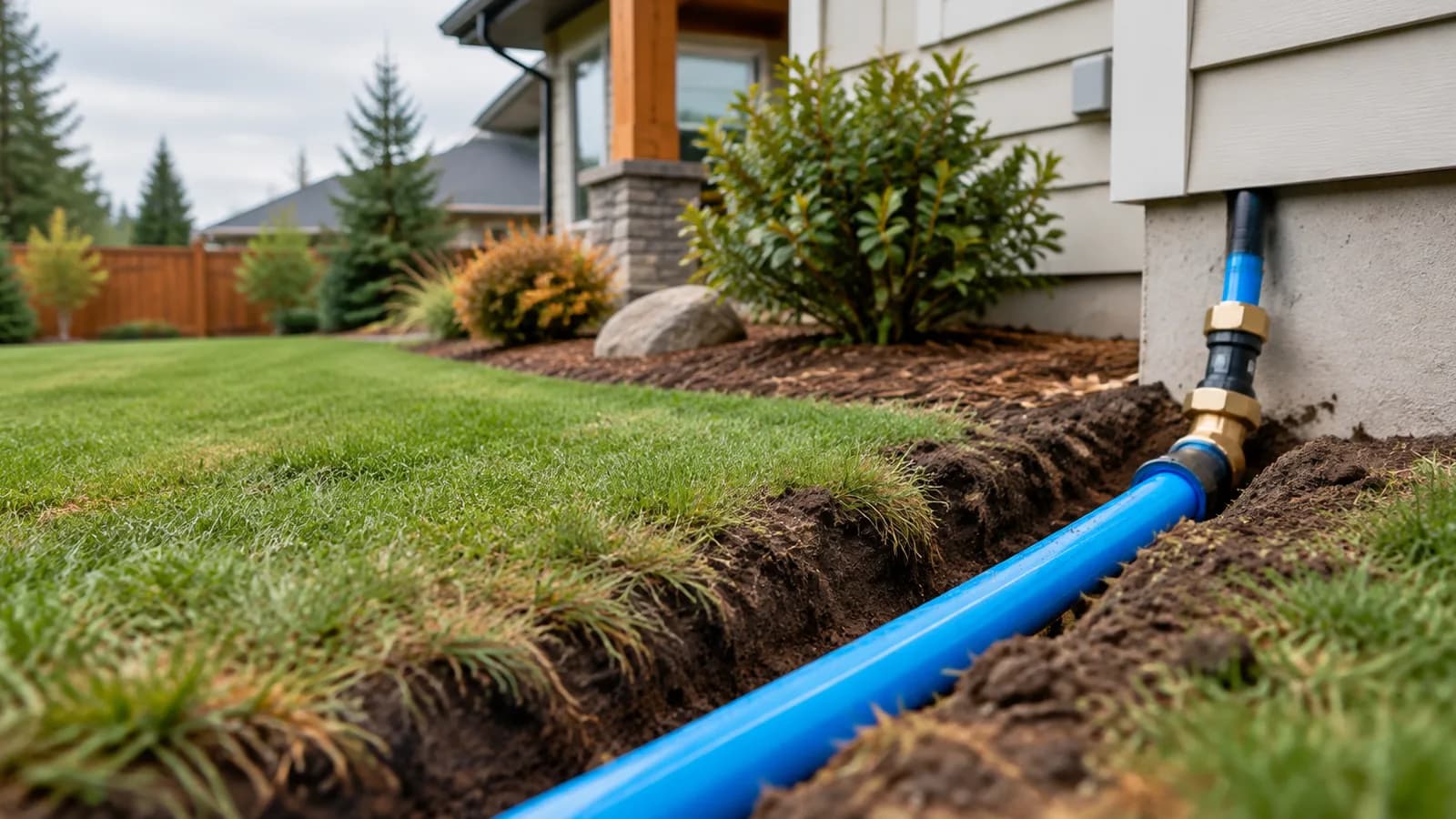
P3 Mechanical & Electrical repairs the water supply lines inside homes and businesses across Nanaimo and central Vancouver Island — split copper, frozen runs in crawlspaces, corroded galvanized pipe, and failed fittings between the main shutoff and each fixture. A typical water line repair is finished in one visit with the water off for part of it, and the price is fixed by a written quote before the work starts rather than over the phone.
Why supply lines fail here
Interior supply lines fail in a handful of recognisable ways. Copper develops pinholes, usually where water chemistry and high velocity have thinned the wall from the inside, and the first sign is a green stain or a bead of moisture rather than a spray. Galvanized steel in older houses rusts inward until the bore has closed to a fraction of its original size, which reads as poor pressure everywhere at once and rusty water first thing in the morning. Poly-B tends to let go at the fittings rather than mid-run, which is its own subject.
Freezing is the seasonal one, and Island winters make it easy to underestimate. Mild averages mean supply lines here often run through vented crawlspaces, unheated garages, and along exterior walls with little or no insulation — an arrangement that is fine until an arctic outflow drops temperatures for a few days. Water expands as it freezes and splits the pipe from inside; the damage usually shows up on the thaw, not during the cold snap, when pressure comes back and finds the split. Draining and isolating outdoor hose bibs before winter, and insulating the runs in unheated spaces, removes most of that risk.
What's included
- Repair of split, frozen, and burst supply lines in crawlspaces, walls, and unheated spaces
- Pinhole and pitting repairs on copper, with replacement of the affected run where it is general
- Replacement of corroded galvanized sections that have narrowed and choked the flow
- Fitting, valve, and shutoff replacement, including seized main shutoffs that no longer close
- Pressure testing and pressure-reducing valve replacement where high pressure is the underlying cause
- Insulation and re-routing of runs that keep freezing in the same spot each winter
Pricing & what's covered
Free estimate
We price the job after an in-home visit, once someone has seen what's there.
- One-year warranty on our labour. Equipment and parts are covered separately, under the supplier's or manufacturer's own warranty.
- We'll go over licensing and equipment with you at the visit.
How it works
Isolate — the water comes off at the closest working shutoff, which is often the first thing that has to be replaced on an older house.
Diagnose — we establish whether the failure is one point or the whole run, since a second pinhole in the same length of copper usually means more are coming.
Repair — the section is replaced and connections made in the material the rest of the system calls for, with the line pressure-tested before anything is closed up.
Prevent — where the cause was freezing or high system pressure, we deal with the cause too, rather than leaving the same repair to be made again next winter.
Frequently asked questions
How much does it cost to repair a water line in a house?
Access moves the number more than the repair itself does. A run visible in a crawlspace is one of the cheaper jobs a plumber does; the same repair behind a tiled wall costs several times more, because most of the work is reaching it and making the wall good afterwards. We price it in writing before starting.
Why does my copper pipe keep springing pinhole leaks?
Pinholes come from the inside out. Water chemistry, high system pressure, and fast flow through undersized or sharply routed pipe erode the copper wall until it perforates at the thinnest point. Because the cause is the water and the layout rather than that one spot, a second pinhole in the same run is a strong hint that section is due for replacement rather than another patch.
How do I stop my pipes freezing in a cold snap?
Insulate any supply line running through a crawlspace, unheated garage, or exterior wall, and shut off and drain outdoor hose bibs before winter. During a hard freeze, leaving a tap barely trickling keeps water moving in the vulnerable run. If a line does freeze, shut the water off at the main before it thaws — most splits only reveal themselves when pressure returns.
Should I repair the pipe or repipe the house?
One failure in otherwise sound pipe is a repair. Repeat failures in the same material — pinholes appearing in different rooms, galvanized that has closed up, Poly-B fittings going one after another — mean the system is at the end of its life and repeat repairs stop making financial sense. That is the point where a partial or whole-house repipe is the cheaper answer.
Why is the water pressure so low in my older house?
On a house still running galvanized steel, the usual reason is the pipe itself: decades of internal corrosion narrow the bore until very little cross-section is left, and no amount of cleaning restores it. Other causes worth ruling out first are a failing pressure-reducing valve, a partly closed main shutoff, or a hidden leak dropping the pressure before it reaches the fixtures.
My pipe just burst — what do I do first?
Shut the water off at the main, then open the lowest tap in the house so the pressure left in the system drains out there instead of through the split. If water is near a panel, an outlet, or a light fixture, cut the power to that circuit before going near it. A line that froze should stay shut off until it has thawed — most splits only show themselves when pressure comes back. Repairs carry the same one-year warranty on our labour as scheduled work, with the parts we supply covered by their own manufacturers.
Ready to get it fixed?
Call now, or send us the details online and we'll follow up.