
Commercial Fire Protection Inspection, Testing & Repair in Nanaimo
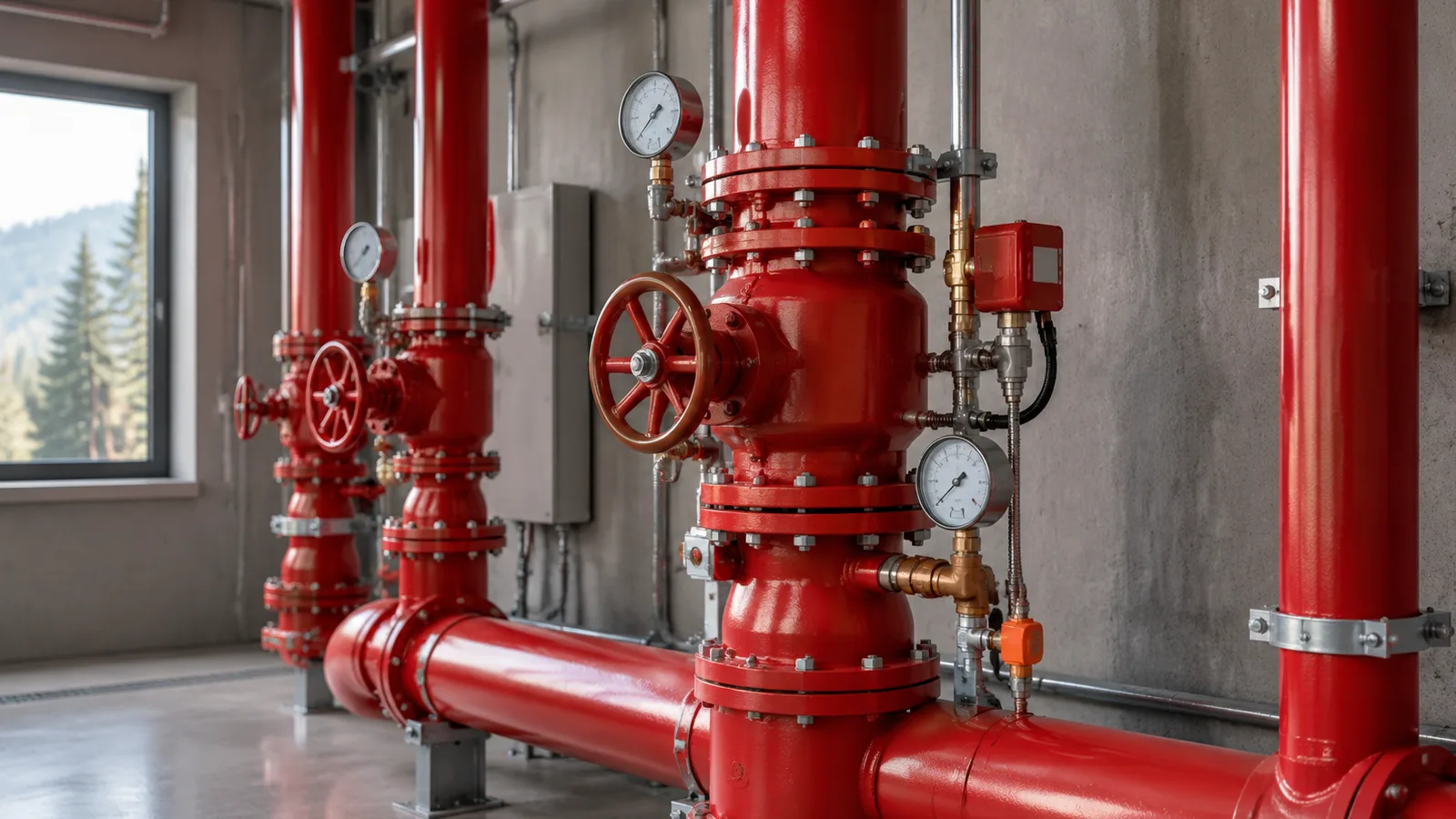
P3 Mechanical & Electrical inspects, tests, and repairs commercial fire protection systems in Nanaimo, Parksville, Qualicum Beach, and across central Vancouver Island — sprinklers and standpipes, portable extinguishers, emergency lighting and exit signs, kitchen suppression, and the backflow assembly on the fire line. The people who call are property managers, strata councils, and tenants carrying a repair obligation in a lease, usually because an inspection has come due or the last one left a deficiency list. The base cycle for most of what is listed above is annual, and what a visit costs comes from a written quote after the building has been walked and what is installed has been counted.
What an inspection visit actually involves
An inspection is a walk of the building with a device list in hand, not a glance at a panel. On a sprinklered building that means main drain and flow testing at the riser, control valves confirmed open and supervised, gauges read against the pressures the system was designed for, and heads checked for paint, corrosion, and clearance. Extinguishers come off the wall to be weighed and checked before they are tagged, and emergency lights go onto battery for the full required duration — which is where most failures surface, because a battery that holds ninety seconds passes the button test on the wall and fails the one that counts.
What comes out of the visit is a document, and on this work the document is the deliverable: every device passed, failed, or noted against its location, in a form a fire prevention officer, an insurer, or a strata council can read without translation. Buildings changing contractors start a step earlier, with an inventory — on older stock the drawings are long gone and the last report’s device counts are the only record of what is installed. It is also how a system altered during a tenant improvement and never re-verified to CAN/ULC-S537 comes to light.
What's included
- Sprinkler and standpipe inspection and testing on the NFPA 25 schedule, including main drain, flow, and valve checks
- Extinguisher service and tagging, plus a monthly check sheet building staff can realistically keep up
- Emergency lighting and exit sign testing for the full required duration, with battery and fixture replacement
- Backflow testing on the fire line arranged alongside the visit, so the city gets its report on time
- Repair of what the inspection finds: heads, valves, gauges, hangers, corroded pipe, dead fixtures
- Freeze protection for wet lines exposed in unheated parkades, loading bays, and exterior stairwells
- A written report and an updated device inventory for the building’s logbook, one per system
Pricing & what's covered
Free estimate
We price the job after an in-home visit, once someone has seen what's there.
- One-year warranty on our labour. Equipment and parts are covered separately, under the supplier's or manufacturer's own warranty.
- We'll go over licensing and equipment with you at the visit.
How it works
Inventory — we walk the building and list what is installed: systems, device counts, locations, access, and whatever the last report left outstanding.
Schedule — dates are set against the interval each system runs on, and access to occupied suites and kitchens is arranged in advance.
Inspection and testing — each system is tested to the standard that applies to it, and results are recorded device by device.
Report and deficiencies — the record for your logbook, plus a separate list split into what cannot wait and what belongs in next year’s budget.
Repair — corrections are scheduled as their own visit, with the plumbing side of the fix held in-house.
Frequently asked questions
Can you take over the fire inspections from our current contractor?
Yes, and it normally starts with an inventory rather than an inspection: we ask for the last couple of years of reports and the outstanding deficiency list, walk the building, and reconcile what is installed against what was last recorded. The BC Fire Code requires those records to be kept on the premises, so the file belongs with the building rather than with whoever wrote it.
The sprinkler line in our parkade froze last winter — can that be prevented?
Yes, and it is worth doing before the next cold snap rather than after. A wet line running through an unheated parkade, loading bay, or exterior stair tower is the exposure; dry-pipe conversion, an antifreeze loop, or heat tracing are the three usual fixes, and which one applies depends on how the space is built and what the original sprinkler design assumed. Repairing the burst pipe without changing the exposure just books the same claim for next year.
Do we need the fire alarm re-verified after a tenant improvement?
If devices were added, moved, or replaced, yes — fire alarm systems are verified to CAN/ULC-S537 before occupancy and again after modification, and the verification report is the document nobody can find a year later. A change of occupancy can also change what the system has to detect and annunciate, and new demising walls change sprinkler coverage, so a tenant improvement is worth reviewing as a whole rather than device by device.
Our emergency lights pass the button test but the inspector failed them — why?
Because the button only proves the lamp lights. The annual test runs the unit on battery for the full duration the building code requires — at least thirty minutes in most buildings and longer in high buildings and care occupancies — and an aging battery that holds a couple of minutes fails that outright while looking fine on the wall. A unit that fails the duration test usually needs the battery rather than the fixture.
If you find a problem during the inspection, do we get a separate quote for it?
Yes. Deficiencies are written up and quoted separately from the inspection itself, so an owner or a strata council can approve the repair on its own. That matters most in a strata, where the repair has to survive a council meeting as a line item with a scope attached, not appear as an unexplained increase on the inspection invoice.
Do you warranty the repairs you make on a fire protection system?
Repair work carries a one-year warranty on our labour, with whatever parts coverage the equipment manufacturer provides sitting on top of it. Keep the quote and that warranty in the same folder as the inspection reports — after a loss an insurer asks for the repair history alongside the test records.
Ready to get it fixed?
Call now, or send us the details online and we'll follow up.