
Heating, cooling and plumbing guides for Vancouver Island
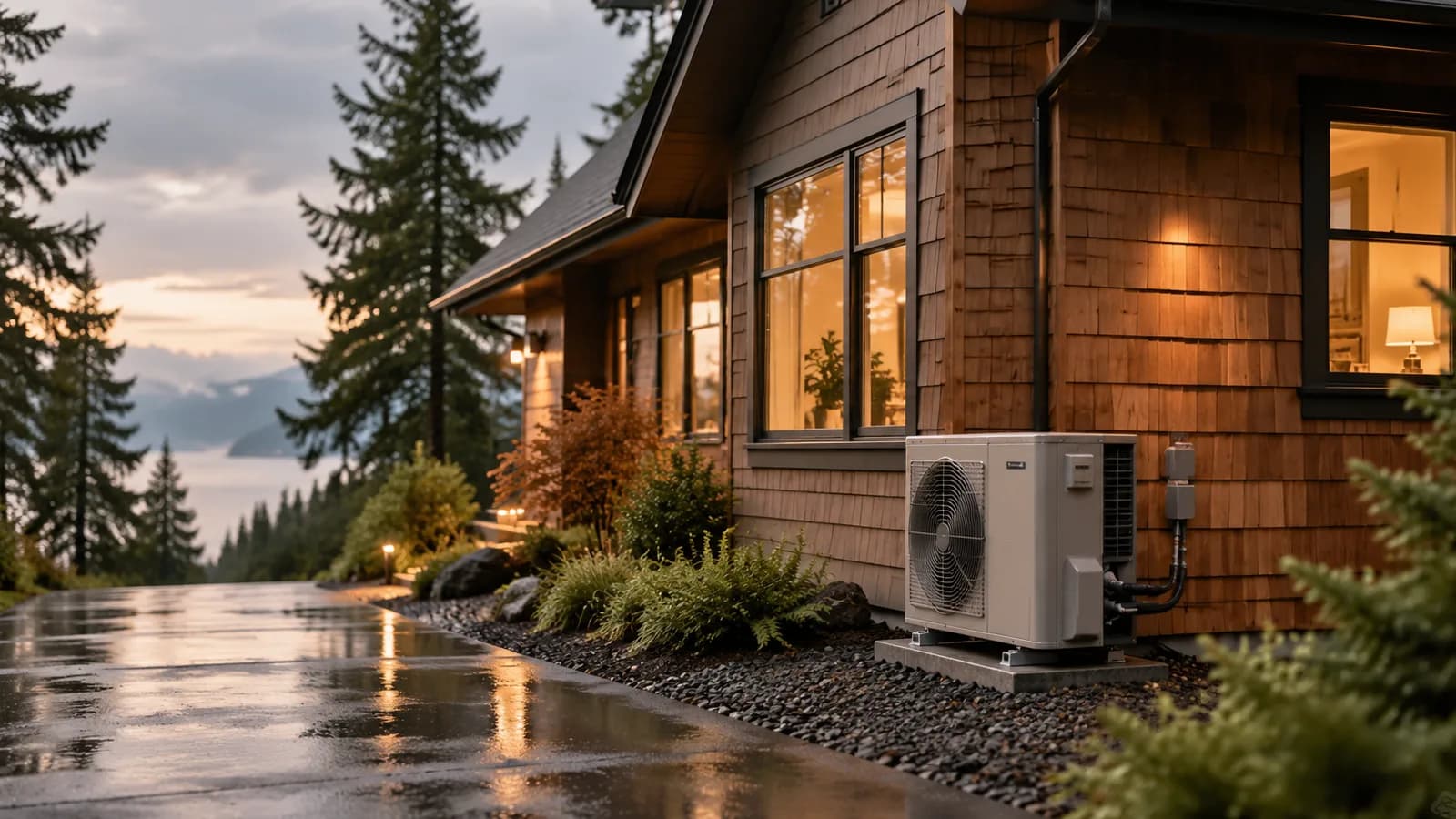
Nine articles on how mechanical systems fail, what maintenance actually prevents, and what to ask a contractor before signing. Written for homeowners and building managers on Vancouver Island, where salt air, damp winters and older housing stock change the answers.
All articles
- Poly-B Plumbing in Nanaimo Homes: How to Tell, and What to Do
Poly-B is the grey polybutylene supply pipe fitted in BC houses from roughly 1985 to 1997, and a large share of the homes built around Nanaimo in those years still runs on it. You can identify it yourself in about a minute, in the crawlspace or beside the water heater. What to do next depends less on the pipe than on where it has already leaked and what your insurer says at renewal.
- Why Mechanical Systems Fail on Vancouver Island — and What Prevents It
Most heating, cooling, and plumbing failures in Vancouver Island buildings trace back to seven ordinary causes: salt-air corrosion, trapped moisture, dirt and scale, worn bearings and capacitors, storm-season power problems, sizing or installation mistakes, and skipped maintenance. Nearly all of them give warning before the system stops, and nearly all are cheaper to catch than to repair.
- Commercial Plumbing Maintenance Best Practices for Vancouver Island
Commercial plumbing maintenance is a scheduled program of inspection, cleaning, and testing across a building's supply, drainage, and hot water systems, run on a monthly, quarterly, and annual cycle instead of waiting for something to back up. On Vancouver Island the recurring problems are predictable — grease in kitchen lines, salt-accelerated corrosion, sediment in water heaters, and backflow assemblies that have to be tested on the municipality’s schedule — which is exactly what makes them plannable.
- How to Choose an HVAC Service Provider: A Seven-Step Guide
Choosing an HVAC service provider is seven checks: licensing for the specific work, reviews read rather than counted, experience with your type of system, three written estimates from site visits, how the company communicates before the sale, a contract with warranty terms in it, and local knowledge of coastal conditions. Done in that order on Vancouver Island, the shortlist narrows itself long before anyone quotes a price.
- HVAC Maintenance Program Benefits in Nanaimo
An HVAC maintenance program is a service agreement with a schedule attached: instead of calling a technician once the furnace has stopped, you book planned seasonal visits that catch wear before it becomes a breakdown. The case for one is stronger in Nanaimo than in most of Canada, because salt air, year-round damp, and a heating season running from October into April put more corrosion and more running hours on the same equipment.
- Commercial HVAC Repair in Nanaimo: What Fails and Why
Commercial HVAC equipment in Nanaimo fails differently than it does inland: salt-laden air off the Strait of Georgia corrodes condenser coils, cabinet fasteners, and electrical connections years before a compressor wears out, and wind-driven rain on a flat roof finishes the job. This article covers the failures that actually show up on Island commercial roofs, how a rooftop unit is diagnosed rather than guessed at, and how the repair-or-replace decision is made on equipment that is halfway through its life.
- How to Reduce Your Utility Bills in Nanaimo
A Nanaimo household pays three separate utilities: electricity from BC Hydro, water, sewer, and curbside collection from the City of Nanaimo or the regional district, and natural gas from FortisBC if the house is connected to it. Only the consumption side of each bill responds to anything you do, and on Vancouver Island most of that consumption is space heating and hot water. This guide works through the changes that actually move the number, from a filter swap to a heat pump.
- Commercial Fire Protection System Requirements in British Columbia
Fire protection requirements for a commercial building in British Columbia come from two codes doing two different jobs: the BC Building Code decides what has to be installed, and the BC Fire Code decides how it is inspected, tested, and documented once the building is occupied. This article covers which systems a commercial property carries, the intervals sprinklers, alarms, extinguishers, emergency lighting, and kitchen suppression run on, and the records a fire inspector or an insurer asks to see.
- How Commercial HVAC Maintenance Contract Pricing Actually Works
Commercial HVAC maintenance contracts are priced from a building’s equipment list — how many units, of what type and age, and how hard they are to reach — not from floor area or a published rate per square foot. This article explains what drives the number, how inspection-only and full-coverage tiers differ, which exclusions do the real damage to a cheap-looking quote, and how to compare two proposals that are not describing the same work.
- Hiring a Mechanical Contractor in Nanaimo: What to Check First
Hiring a mechanical contractor in Nanaimo comes down to four checks you can make yourself: current licensing for the specific trade, proof of insurance, an itemized written quote, and references from jobs like yours. This guide covers each one, what changes when the building is commercial rather than a house, and the mistakes that cost the most.
Rather just ask someone?
Tell us what the system is doing and we will tell you what it takes to fix it.