
Range Hood Installation in Nanaimo & Vancouver Island
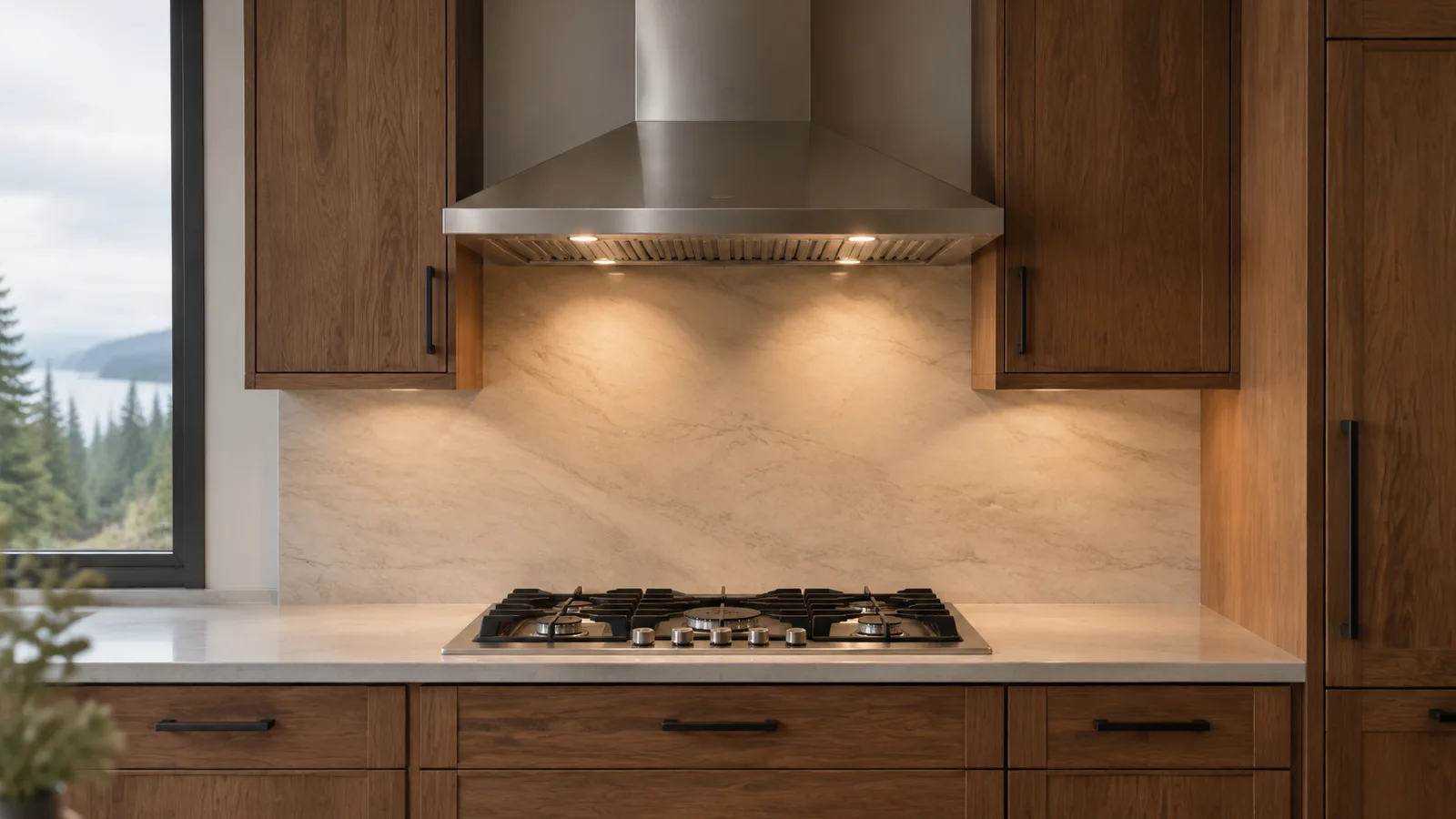
P3 Mechanical & Electrical mounts and ducts range hoods in homes across Nanaimo and central Vancouver Island, outdoors rather than recirculated back into the room. The hood is supplied separately, and a range hood installation is half a day where a duct route already exists and a full day when a new one has to be cut and capped. The duct route decides both the time and the price, so the number comes from a written quote after we have seen the kitchen.
Ducted outdoors, not recirculated
A recirculating hood pulls air through a charcoal filter and blows it back at the ceiling. It catches some grease and some smell, and it does nothing whatsoever about the two things that matter most in a kitchen: heat and water vapour. Everything a pot of pasta or a wok puts into the air stays in the house, finds the coldest surface available, and condenses there — on top of a moisture load that Island houses are already carrying through the winter. If there is any practical route outdoors, ducting is worth the extra work.
That route is most of the job. Rigid smooth-wall duct at full diameter, the shortest run with the fewest elbows, a proper exterior cap with a backdraft damper, and no reducer squeezed in to make the duct fit a joist bay: those decide whether a hood is quiet and effective or loud and disappointing. Noise is nearly always a duct problem rather than a fan problem, because a long, kinked, undersized run makes the blower work at the top of its range and that is the sound people complain about. Past a certain exhaust rate the BC Building Code also requires a dedicated make-up air path, since a powerful hood in a tight house can otherwise pull combustion gases back down the flue of a gas appliance.
What's included
- Wall-mounted, under-cabinet, island, and insert hoods, all ducted to the outside
- A duct route planned for the shortest practical run at full diameter, in rigid metal rather than flex
- An exterior wall or roof cap with a backdraft damper, sealed and flashed against wind-driven rain
- Filters and baffles left where they can actually be reached and washed
- Removal of the old hood or over-range microwave, and making good the opening it leaves
- A make-up air path where the hood is powerful enough that the code requires one
- Airflow and noise checked with the hood running before we leave the kitchen
Pricing & what's covered
Free estimate
We price the job after an in-home visit, once someone has seen what's there.
- One-year warranty on our labour. Equipment and parts are covered separately, under the supplier's or manufacturer's own warranty.
- We'll go over licensing and equipment with you at the visit.
How it works
Kitchen visit — we look at the cooktop, the cabinet above it, and above all at where a duct can honestly go.
Sizing and quote — the hood matched to the cooking, with the duct and the cap priced in rather than added later.
Installation — hood mounted, duct run and sealed, cap fitted and flashed outside, and the old opening made good.
Test — run through every speed, confirm the damper opens and closes, and check that it is pulling at the cooktop instead of just making noise.
Frequently asked questions
Does a range hood have to vent outside?
An ordinary residential hood is not always required to, but it is the version that actually works. A recirculating filter takes out some grease and odour and leaves all of the heat and moisture in the room, which in a coastal house means more condensation to deal with somewhere else.
Why is my range hood so loud?
Usually the ductwork rather than the fan. A long run, several tight elbows, flexible duct, or a reduced outlet all force the blower to work near the top of its range, and that is what you hear. Shortening and straightening the run, or going back up to full diameter, is often quieter than buying a more expensive hood.
What size range hood do I need?
Size follows the cooktop, not the kitchen. The hood should be at least as wide as what sits under it, and a wide gas range with a griddle needs far more airflow than a four-burner electric one. Mounting height matters as well: hung too high, a hood loses the plume before it can catch it.
Can you put a hood over an island?
Yes, though it is the harder version of the job. The duct has to go up through the ceiling and out, and there are no walls to help hold the plume, so an island hood is normally sized larger than a wall one. If the cooktop is moving as part of the work, the gas line has to follow it.
How much does range hood installation cost?
We publish no figure for it, and the hood itself is bought separately from the installation. What moves the number is the duct route: an outside wall behind the cooktop is the cheap case, and a run up through two floors to a roof cap is not. Making good the old opening is priced in rather than added afterwards, and the visit that sets the price is free.
How long will my kitchen be out of action?
Plan on half a day where a duct route already exists, and a full day when a new one has to be cut and capped. The cooktop is unusable while the hood is off, so it is worth doing in one visit rather than in stages, and the work carries a one-year warranty on our labour, with the hood covered by its own manufacturer.
Ready to get it fixed?
Call now, or send us the details online and we'll follow up.