
Table of Contents
- How Salt Air Damages HVAC Systems: Understanding the Problem
- Step 1: Regular Cleaning and Freshwater Rinsing of Outdoor Coils
- Step 2: Inspect and Maintain Your Condensate Drain System
- Step 3: Apply Protective Coatings, Epoxy, Phenolic, and Polymer Options
- Choosing Corrosion-Resistant HVAC Units Canada: New Installation Strategies
- Coastal HVAC Maintenance Canada: Establishing a Preventative Schedule
- HVAC Lifespan in Coastal Areas Canada: What to Expect
- Common Mistakes to Avoid When Preventing Salt Air HVAC Corrosion
Preventing Salt Air HVAC Corrosion: A Coastal Guide
Last Updated: July 28, 2026
Salt air corrosion is one of the most destructive forces acting on HVAC systems in coastal regions. At P3 MECHANICAL & ELECTRICAL, we’ve seen countless systems fail prematurely because property owners didn’t understand how salt spray accelerates oxidation on condenser coils and refrigerant lines. Preventing salt air HVAC corrosion requires a multi-layered approach combining regular maintenance, protective coatings, and strategic equipment choices.
How Salt Air Damages HVAC Systems: Understanding the Problem
Salt spray initiates an electrochemical process that eats through metal. When sodium chloride particles from ocean air settle on aluminum and copper components, they create a corrosive environment that accelerates oxidation far faster than standard humidity alone.
Salt Spray and Oxidation on Condenser Coils
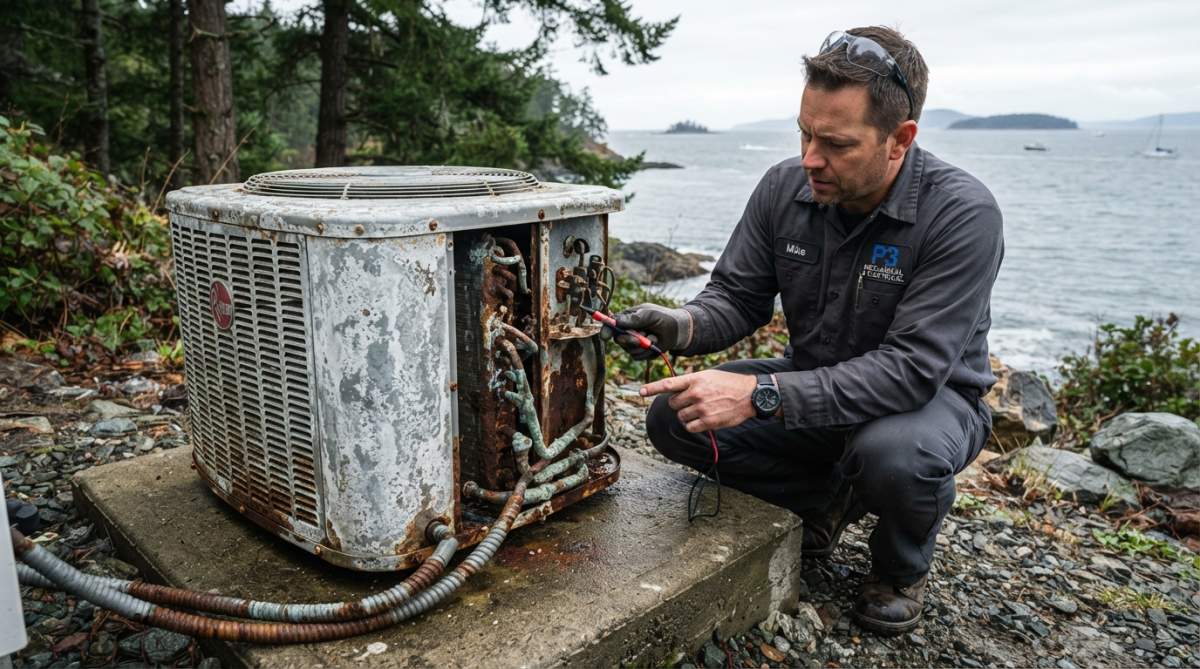
The condenser coils are where most salt air damage occurs. These aluminum fins are exposed year-round, making them vulnerable to salt accumulation. When seawater mist combines with temperature fluctuations and moisture, the protective oxide layer on aluminum breaks down, exposing bare metal to further corrosion. Salt spray creates tiny pits and cracks in the coil structure that expand over time, reducing heat transfer efficiency and forcing your system to work harder.
A coastal HVAC maintenance Canada schedule should include visual inspections for white, chalky deposits on the outdoor unit, that’s oxidation at work. The problem intensifies if your property sits within one mile of the ocean, where salt air penetration increases exponentially. Coastal BC environments, particularly around Nanaimo and Vancouver Island, experience this concentrated salt spray effect regularly.
Refrigerant Leaks and System Longevity
Corroded coils leak. Pinhole leaks develop when corrosion eats through the coil walls, allowing refrigerant to escape. A single small leak can reduce system capacity by 10-15% within weeks. System longevity in coastal areas Canada drops dramatically when salt air corrosion goes untreated. An HVAC unit that typically lasts 12-15 years might fail in 6-8 years if exposed to unchecked salt spray.
Ignoring small refrigerant leaks in coastal areas can result in compressor burnout within one heating season. Once the compressor fails, replacement costs typically exceed $2,000 for residential systems, and the entire unit may need replacement if the damage is severe.
Step 1: Regular Cleaning and Freshwater Rinsing of Outdoor Coils
The simplest and most effective defense against salt air HVAC corrosion is regular freshwater rinsing. This removes salt deposits before they can initiate the oxidation process.
Frequency and Best Practices for Coastal BC Environments
In coastal BC, rinse your outdoor unit every two weeks during spring and summer months when salt air activity peaks. During fall and winter, monthly rinsing is sufficient unless you experience heavy ocean wind events. Use a standard garden hose with moderate water pressure; high-pressure washers can damage the delicate coil fins.
Here’s the process:
- Turn off the system at the thermostat and breaker
- Allow the unit to cool for at least 30 minutes
- Gently spray water across the coil face, moving from top to bottom
- Use freshwater only, never use saltwater or brackish water from outdoor sources
- Let the unit air-dry completely before restarting
- Repeat this process every two weeks in peak salt spray season
The key is consistency. Salt particles accumulate quickly in coastal environments, so regular intervals prevent buildup. Rainwater in coastal areas contains dissolved salt, which can worsen corrosion rather than prevent it.

Set a calendar reminder for every two weeks during spring and summer. Many coastal property owners schedule this maintenance alongside lawn care, treating it as routine yard work rather than a separate chore. This consistency is what separates systems that last 15 years from those that fail in 8.
Step 2: Inspect and Maintain Your Condensate Drain System
The condensate drain removes moisture from your system. In coastal environments, this drain becomes a collection point for salt deposits and mineral buildup. A clogged drain forces water to back up into the unit, creating conditions that accelerate corrosion and promote mold growth.
Check your condensate drain monthly. Water should drip steadily from the small PVC pipe extending from your outdoor unit when the system runs. If the drain is blocked, water pools around the coil base, creating a corrosive saltwater bath. Clear blockages by flushing the drain with freshwater from a garden hose. If the drain is severely corroded or damaged, replace the entire drain line.
Step 3: Apply Protective Coatings, Epoxy, Phenolic, and Polymer Options
Protective coatings create a barrier between metal components and salt air. Three main coating types are available: epoxy, phenolic, and polymer.
Epoxy coatings are the most common choice for HVAC applications. They adhere well to aluminum and copper, creating a hard, durable finish that resists salt spray effectively. Epoxy typically lasts 5-7 years before requiring reapplication.
Phenolic coatings offer superior salt spray resistance compared to epoxy. They’re specifically designed for marine environments and provide protection lasting 7-10 years. This coating is the choice for properties within a half-mile of the ocean. For example, Canadian Coil Technologies offers Aqua Aero, an FDA-approved pure phenolic coating applied in their facility for HVAC-R equipment, designed for harsh environments.
Polymer coatings represent the newest technology. They’re flexible, allowing the underlying metal to expand and contract without cracking the protective layer. Polymer coatings last 8-12 years and offer excellent adhesion to both aluminum oxide and bare metal surfaces. They’re more expensive than epoxy or phenolic but provide superior durability in the harshest coastal environments.
DIY vs. Professional Application: Efficacy and Warranty Implications
Professional application makes a dramatic difference in coating longevity and effectiveness. DIY application requires proper surface preparation, cleaning, sanding, and priming, steps most homeowners skip or do inadequately. Without proper prep, coatings don’t adhere properly and peel or flake within months.
Professional application involves comprehensive surface preparation, multiple coating layers, and proper curing time. Technicians use industrial-grade materials and equipment, ensuring uniform coverage and maximum adhesion. Professional coatings typically carry warranties, epoxy 3-5 years, phenolic 5-7 years, polymer 7-10 years, which protect your investment if the coating fails prematurely. Additionally, some manufacturers void warranty coverage if non-approved coatings or improper installation damage the unit.
Cost-Benefit Analysis: Long-Term Savings
The cost-benefit calculation for protective coatings is straightforward. A full HVAC system replacement in a coastal area runs $8,000-$15,000 for residential properties. A protective coating application costs $1,500-$3,000, depending on system size and coating type. If a coating extends your system’s lifespan by 3-5 years, the return on investment is immediate.
| Coating Type | Initial Cost | Lifespan | Reapplication Cost | Total 15-Year Cost |
|---|---|---|---|---|
| Epoxy | $1,500 | 5-7 years | $1,200 | $3,900 |
| Phenolic | $2,000 | 7-10 years | $1,500 | $4,000 |
| Polymer | $2,500 | 8-12 years | $1,800 | $4,300 |
| No coating | $0 | 6-8 years | N/A | $12,000 replacement |
A $2,000 coating investment that extends system life by 5 years saves you $10,000+ compared to premature replacement. In coastal environments, this is the most cost-effective maintenance decision you can make.
Choosing Corrosion-Resistant HVAC Units Canada: New Installation Strategies
If you’re installing a new system in a coastal area, material selection matters as much as maintenance. Standard aluminum-based systems corrode faster in salt air.
Aluminum Oxide and Baked-On Coating Technologies
Modern HVAC manufacturers offer condenser coils with factory-applied protective coatings. Aluminum oxide coatings are applied during manufacturing, creating a permanent barrier against salt spray. Unlike field-applied coatings that require reapplication, factory coatings are integral to the coil structure. They don’t peel or flake because they’re chemically bonded to the aluminum surface.
Baked-on coatings use heat to cure the protective layer, creating an extremely durable finish. These systems cost 15-25% more than standard units but eliminate the need for field coating applications. For new installations in coastal BC, investing in factory-coated systems is often more cost-effective than buying a standard unit and applying coatings later. When selecting a new system, ask the manufacturer about salt spray testing certifications. In Canada, look for units tested to relevant CSA Group standards or ISO 9227, which is an international standard for salt spray corrosion testing.
Coastal HVAC Maintenance Canada: Establishing a Preventative Schedule
Reactive maintenance, fixing problems after they occur, is expensive in coastal areas. Preventative maintenance catches corrosion early, when repair costs are minimal.
Routine Maintenance for Maximum System Longevity
A comprehensive coastal HVAC maintenance Canada program includes:
- Monthly visual inspections – Look for white corrosion deposits, rust spots, or visible damage on the outdoor unit
- Bi-weekly freshwater rinsing during salt spray season (April-September in coastal BC)
- Quarterly professional inspections – Technicians check refrigerant levels, coil condition, and electrical connections. The Canadian Standards Association (CSA Group) recommends quarterly professional inspections for systems in high-corrosion environments.
- Annual coil cleaning – Professional-grade cleaning removes stubborn salt deposits
- Drain system maintenance – Clear condensate drains and check for blockages
- Coating inspection and touch-ups – Assess protective coating condition and apply spot repairs as needed
A single professional inspection costs $150-$300. A complete system replacement costs $8,000-$15,000. Many coastal property owners benefit from annual maintenance contracts with qualified HVAC technicians, which include scheduled inspections, priority service, and discounted repairs.
HVAC Lifespan in Coastal Areas Canada: What to Expect
In non-coastal environments, HVAC systems typically last 12-15 years. In coastal areas, that timeline compresses significantly without proper maintenance. An unmaintained system might last 6-8 years before salt air corrosion causes catastrophic failure. A well-maintained system with protective coatings can reach 12-15 years, matching non-coastal performance.
Several factors influence coastal system lifespan: distance from ocean (systems within one mile corrode 2-3 times faster), prevailing wind direction, maintenance frequency, and coating condition. For properties in Nanaimo or other Vancouver Island coastal areas, plan for system replacement every 10-12 years if well-maintained, or 6-8 years if neglected.
Common Mistakes to Avoid When Preventing Salt Air HVAC Corrosion
Neglecting the Coil Shield and Protective Barrier
Many coastal property owners assume their HVAC systems are protected by standard design. They’re not. Standard units have minimal protection against salt air. The coil shield, a protective barrier that surrounds the coil fins, is often omitted to reduce manufacturing costs. Without a coil shield, salt spray has direct access to the most vulnerable component.
A coil shield is a worthwhile addition to any coastal installation. It reduces direct salt spray exposure by 60-70% while allowing adequate airflow for cooling. The shield should be stainless steel or coated aluminum. Retrofitting a shield onto an existing system costs $400-$800 but can extend system life by 3-5 years. Position your outdoor unit to minimize salt spray exposure by avoiding direct ocean wind paths and placing it on the downwind side of your home when possible.
Ignoring Corrosion Inhibitor Products and Salt Accumulation
Corrosion inhibitor products are available for HVAC systems, chemical treatments that slow oxidation on metal surfaces. These aren’t replacements for coatings or regular maintenance, but they’re useful supplements at minimal cost ($50-$150 per application).
Salt accumulation happens invisibly. A two-week gap between rinsings allows significant salt buildup in coastal areas. Consistency matters more than intensity; frequent light rinsing prevents accumulation better than occasional heavy cleaning. Never cover your outdoor unit during winter months, as covers trap moisture and accelerate corrosion.
Covering your outdoor unit during winter months can accelerate corrosion by trapping salt-laden moisture against the coils. Leave your unit uncovered unless you live in an area with extreme weather that could damage the unit.
Wrapping Up Your Coastal HVAC Protection Strategy
Preventing salt air HVAC corrosion requires consistent maintenance, strategic investments in protective coatings, and informed decisions about equipment selection. The systems that last longest in coastal environments are those that receive regular attention before problems develop.
If you’re managing an HVAC system in a coastal BC environment and want expert guidance on corrosion prevention, P3 MECHANICAL & ELECTRICAL offers comprehensive maintenance programs designed specifically for salt air protection. Our certified technicians conduct thorough inspections, apply professional-grade protective coatings, and establish maintenance schedules that keep your system running efficiently.
Get a quote from P3 MECHANICAL & ELECTRICAL today and learn how a tailored coastal maintenance plan can extend your system’s lifespan and protect your investment against salt air damage.
According to research from the Coastal Engineering Research Center, salt spray exposure increases corrosion rates on unprotected metals by 300-500% compared to inland environments. This underscores why coastal property owners must treat corrosion prevention as a critical maintenance priority.
The Canadian Standards Association’s guidelines on HVAC maintenance recommend quarterly professional inspections for systems in high-corrosion environments, emphasizing the importance of professional oversight in coastal areas.
Research from the International Journal of Corrosion on marine atmospheric corrosion demonstrates that protective coatings reduce corrosion rates by 85-95% when properly applied and maintained, validating the cost-benefit analysis of professional coating applications in coastal regions.
Frequently Asked Questions
How does salt air damage HVAC systems in coastal Canada?
Salt air accelerates oxidation on condenser coils and aluminum components, causing corrosion that compromises heat transfer efficiency and can lead to refrigerant leaks. The saltwater spray deposits on outdoor units and, without regular freshwater rinsing, creates a corrosive layer that eats through protective surfaces over time. This damage reduces system longevity and increases repair costs significantly.
What are the best protective coatings for preventing salt air HVAC corrosion?
Epoxy, phenolic, and polymer coatings are the most effective options for HVAC anti-corrosion coatings in Canada. Epoxy coatings provide strong adhesion and chemical resistance, phenolic coatings offer excellent moisture barrier properties, and polymer coatings deliver flexibility and durability. Professional application typically ensures better longevity than DIY methods, though warranty implications vary, always check your system's warranty before applying coatings yourself.
How often should I clean my HVAC unit if I live near the Canadian coast?
In coastal BC and similar salt-air environments, inspect and rinse your outdoor unit every 3 months, or monthly during high-wind seasons. More frequent cleaning may be needed if your property is within 500 meters of the ocean or in areas with heavy salt spray. Regular maintenance prevents salt accumulation on coils and extends system longevity significantly compared to annual-only cleaning schedules.
Can preventative maintenance actually prevent HVAC breakdowns in coastal areas?
Yes, routine preventative maintenance including coil cleaning, condensate drain inspection, and protective coating application directly reduces salt air corrosion damage and extends HVAC lifespan. Regular inspection by a certified HVAC technician catches early signs of salt air damage before they become costly repairs. This proactive approach prevents unexpected failures during winter and saves money on replacements over the system's lifetime.
This article was written using GrandRanker
Leave a Reply