
Heat Pumps, Heating & Plumbing on Hornby Island
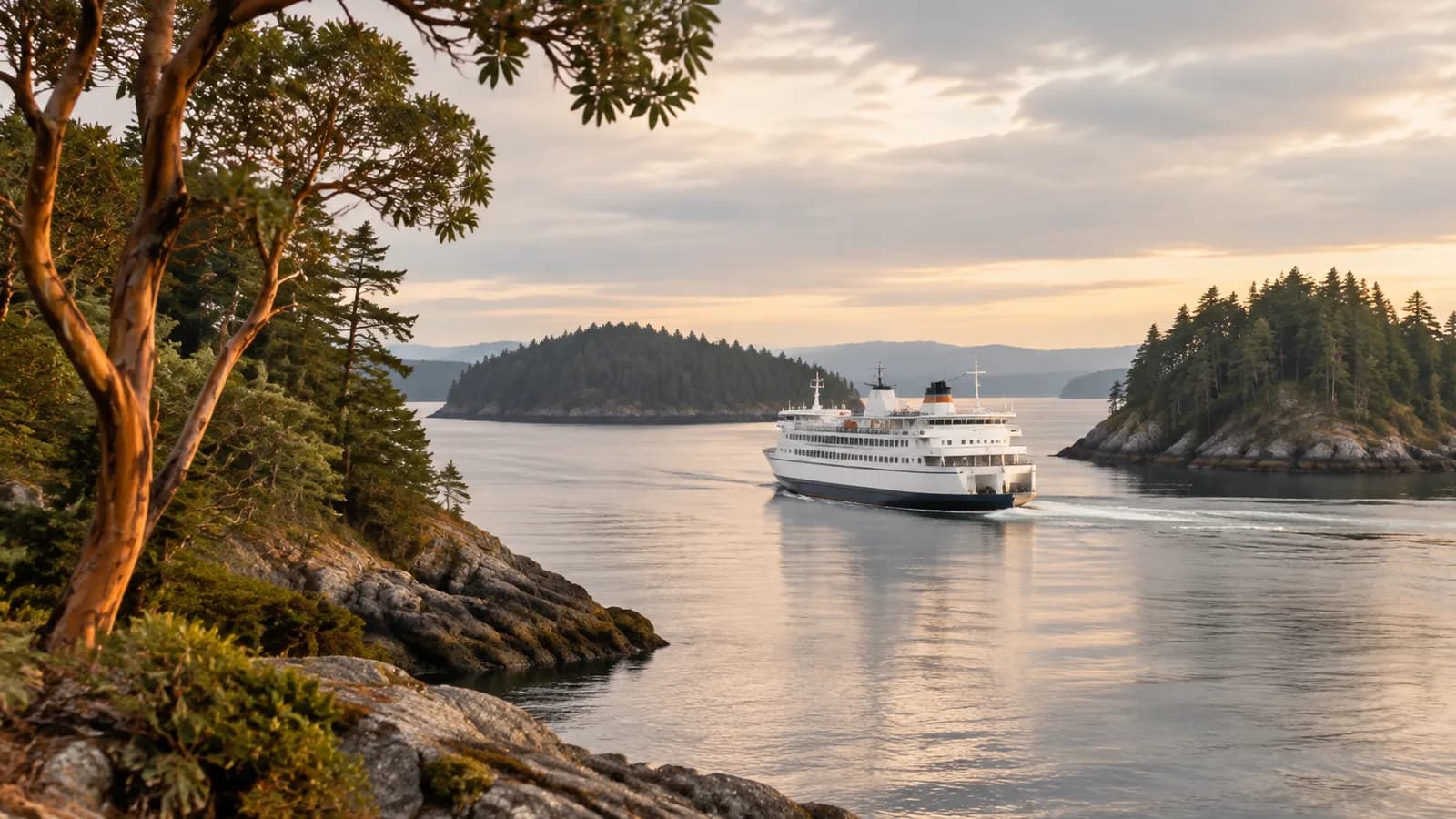
Hornby sits behind two crossings — Buckley Bay to Denman, then the length of Denman to Gravelly Bay and across to Shingle Spit — which is the single fact that shapes every job on the island. There is no gas main here, so heating means a heat pump, electric, propane, or wood, and a large share of the housing is seasonal, which changes what a system has to do for the nine months nobody is in the building.
Something's not working right now?
Start here. Each one goes to the crew that handles it, and carries the one thing worth checking before we arrive.
- The furnace or heat pump won't startCheck the power switch that looks like an ordinary light switch, near the unit or at the top of the basement stairs.
- No hot water, or water where it shouldn't beShut the water off at the main if you can reach it, and stay clear of any leak near wiring or a panel.
- The house won't cool, or the air is staleCheck the filter first: a clogged one chokes airflow long before the equipment itself fails.
Not sure which one it is? Describe it on the phone and we'll work it out: +1-250-824-7363
An island whose population changes with the season
Hornby fills up in July and empties out by October, and the housing reflects that. Around Tribune Bay and Whaling Station Bay there are cabins used for a few weeks a year, along Central Road and up toward Mount Geoffrey there are owner-built houses and studios, and near Shingle Spit and Ford Cove there is year-round housing that has to work through a wet, windy winter. The same island holds both, often on the same road.
Heating is wood, baseboards, propane, and increasingly heat pumps, with no gas connection available to any of it. On the owner-built stock in particular, a heat pump upgrade starts with the building rather than with the equipment: how much of it is insulated, how many rooms are genuinely heated through the winter, and whether an addition put up over three summers has an envelope worth heating at all.
Cabins that sit closed, and what that costs
An unheated coastal building through a Hornby winter is a mould experiment. Damp air, no ventilation, and no heat put moisture into mattresses, cabinets, and drywall, and the bill for that is usually larger than the power bill would have been. A ductless head left on a low hold setting — around 10 °C — keeps the building above the dew point and the pipes above freezing, and it costs far less to run than heating the place to comfort.
Closing a place up properly matters as much as the equipment. Water lines drained or held under pressure with a monitored shut-off, traps protected, the heat pump left in a mode that will not fight an empty house, and filters changed before the season rather than after it. Most Hornby properties are on a well or rainwater catchment with a septic field, so the water side is worth handling deliberately rather than by switching things off. When you come back in July, that same ductless head is also the air conditioning for the hot weeks Hornby is known for.
What decides the job in Hornby Island
- Trust land, CVRD permits
- Hornby Island land use runs through the Islands Trust, while building, mechanical, and plumbing permits come from the Comox Valley Regional District. We pull those and book the inspections as part of the job.
- Wood, propane, baseboards
- No gas main reaches Hornby, so heating is a heat pump, electric baseboards, propane, or wood. On the owner-built housing along Central Road and up toward Mount Geoffrey, a heat pump usually goes in beside the wood stove rather than instead of it.
- Off the wood stove
- Switching a cabin or a house off a wood stove or baseboards usually qualifies under CleanBC Better Homes and BC Hydro programs, which were written for exactly this kind of rustic and off-grid-style stock. What you get back depends on the household and the equipment installed.
- Two crossings, one day
- Equipment for a Hornby job crosses at Buckley Bay, drives the length of Denman, and crosses again from Gravelly Bay to Shingle Spit, and that second leg has only so many sailings in a day. So a visit is planned as a full working day, with measurements taken before the trip and spares aboard.
Why homeowners here choose P3
- Two crossings planned as one working day, with spares aboard
- Low hold settings and freeze protection for cabins left closed
- Marine-grade coated outdoor units for Tribune Bay and Ford Cove placements
- Owner-built houses surveyed room by room before anything is sized
What happens after you call
You call, or send the form. We ask what the equipment is, how old it is and what it is doing now — enough to tell a repair from a replacement before anybody drives anywhere.
We look at the job. Some things are settled on the phone; anything that touches ductwork, venting, a gas line or a water line gets looked at on site, because guessing at those from a description is how a quote goes wrong.
You get the scope and the price in writing, with the equipment named, so it can be read next to somebody else’s quote line for line. The estimate itself is free, and it follows the visit rather than the phone call.
Where the work needs a permit — furnaces, heat pumps, gas, plumbing — we pull it and book the inspection as part of the job, rather than handing you a form at the end.
Frequently asked questions
What heats a Hornby house best when everything arrives by two ferries?
A heat pump, in most cases, precisely because of those two ferries. Propane and heating oil have to be trucked across both crossings, and that cost never goes away, while the electricity a heat pump runs on is already at the property. It also handles both ends of the Hornby year — damp, windy winters and the hot, dry July weeks the island is known for — without a second system.
We only use the cabin in summer. Is a heat pump actually worth it?
Often yes, and not mainly for comfort. A ductless mini-split can be left over winter on a low hold setting, around 10 °C, which keeps the building above the dew point, stops the mould and mildew that ruin an unheated coastal cabin, and keeps the plumbing from freezing. The same unit is then the air conditioning when you arrive in July, which no wood stove will ever be.
Do you actually come across the second ferry, or only as far as Denman?
All the way to Hornby. The route is Buckley Bay to Denman, the length of Denman to Gravelly Bay, then across to Shingle Spit, and we plan it as a full working day rather than a side trip. That is also why we ask more questions before a Hornby visit than we would for a job on the highway — the parts we bring have to be the parts the job needs.
How do we stop a place that sits closed all winter from going mouldy?
Keep a little heat and a little air movement in it. A ductless head on a low hold setting, ventilation that runs even when nobody is home, and filters changed before the building is closed up do most of the work. The rest is plumbing discipline: drain or protect the lines, look after the traps, and make sure a slow leak in February is not discovered in June.
Are there rebates for getting off a wood stove or baseboards on Hornby?
Yes. CleanBC Better Homes and BC Hydro both run programs aimed at exactly the housing Hornby has — rustic cabins, older properties near Mount Geoffrey, and off-grid-style homes on baseboards and wood. We do not publish an amount, because it depends on your household income and on the equipment installed, and we would rather help you file the application than hand you a number that turns out to be someone else’s.
Nearby areas we also serve
Ready to book a technician?
Call now, or send us the details online and we'll follow up.