
Commercial Plumbing in Nanaimo & Central Vancouver Island
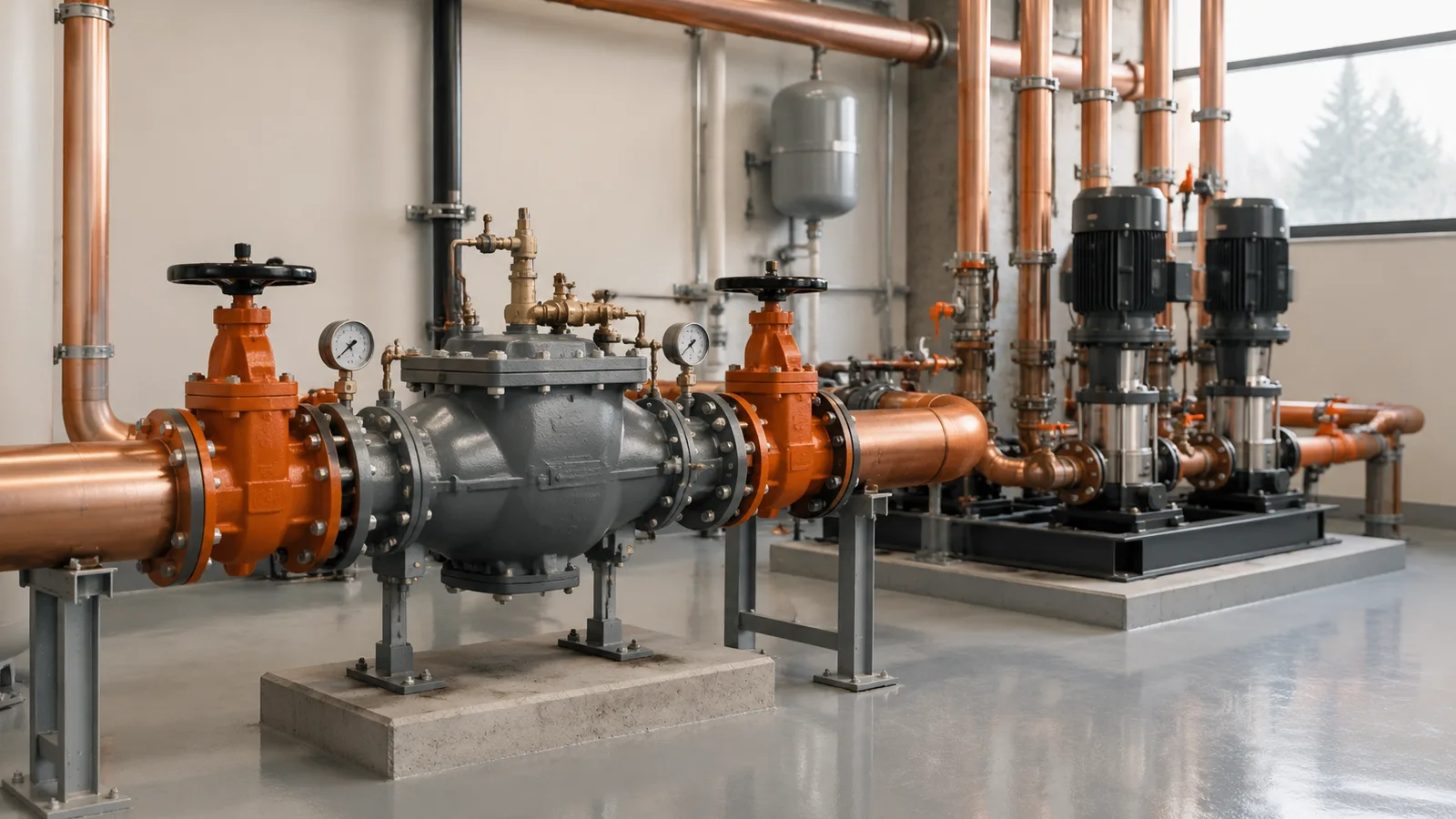
P3 Mechanical & Electrical maintains, repairs, and installs commercial plumbing across Nanaimo, Parksville, Qualicum Beach, and central Vancouver Island — restaurants, retail units, offices, and multi-unit and strata buildings. Scheduled maintenance is priced per site from the fixture and equipment list, and repair work is quoted in writing after we have walked the building rather than from a rate per square foot.
Duty cycle, consequence, and compliance
Commercial plumbing differs from residential in two ways that matter to whoever pays the invoice. The first is duty cycle: a restaurant sink, a strata laundry room, or a washroom in a busy retail unit sees more use in a month than a house sees in a year, so flush valves, faucet cartridges, and grease-loaded branch lines wear on a schedule rather than by accident. The second is consequence — a failure closes a kitchen, empties a floor of offices, or puts a strata council in front of an insurer, so the useful work happens before it, on a planned visit.
Compliance sits on top of that. Municipalities on the Island run cross-connection control programs that require testable backflow assemblies on commercial services to be tested annually by a certified tester and the report filed with the local authority. Sewer-use bylaws require food premises to run a grease interceptor and to keep it serviced, and a health or bylaw inspector will ask for the log, not for your word. Keeping those records current is unglamorous and it is the part that most often goes missing when a building changes managers.
What's included
- Scheduled maintenance on commercial fixtures, water heaters, pumps, and drainage, on an agreed scope per site
- Backflow prevention: installation, repair, annual testing, and the report the municipal cross-connection program asks for
- Grease interceptor installation, servicing, and the maintenance log required under sewer-use bylaws
- Commercial drain and stack work — grease-loaded kitchen lines, shared stacks, floor drains, and camera survey of the lateral
- Repairs and replacement of commercial fixtures, flush valves, mixing valves, hose stations, and commercial water heaters
- Fit-out and tenant improvement plumbing: new sinks, dishwashers, ice machines, and the gas and drainage a kitchen needs
- Written reports per visit — what was done, what is failing, and what should be quoted next — in a form a council or an owner can approve
Pricing & what's covered
Free estimate
We price the job after an in-home visit, once someone has seen what's there.
- One-year warranty on our labour. Equipment and parts are covered separately, under the supplier's or manufacturer's own warranty.
- We'll go over licensing and equipment with you at the visit.
How it works
Site walkthrough — we inventory the fixtures, the water heaters, the interceptors, and the backflow devices, and note what stops trading when each one fails.
Scope and quote — a written scope per building, priced from that list rather than from a rate per square foot.
Scheduled visits — dates set in advance so access to occupied units, kitchens, and washrooms is arranged rather than improvised.
Records — test reports, interceptor servicing, and repair history kept current, so a compliance request is answered from a file.
Frequently asked questions
How often does a commercial backflow preventer need to be tested in BC?
Annually, in most cases. Municipal cross-connection control programs require testable assemblies on commercial services to be tested every year by a certified tester, with the report submitted to the local authority — the requirement protects the public water main from contamination flowing back out of your building.
Does my restaurant need a grease interceptor?
Food premises discharging fats, oils, and grease are required to run one under local sewer-use bylaws, and to have it serviced and logged. Beyond the bylaw, an interceptor that is not pumped on schedule stops working, and the grease goes into your branch line and then the municipal sewer — which is where the expensive version of this problem starts.
How much does commercial plumbing service cost?
A single service call is priced as one visit; a maintenance contract is priced per site from the fixture and equipment list, so a restaurant kitchen and a four-unit retail strip do not get the same number. There is no per-square-foot rate that survives contact with a real building — the fixture count, the equipment, and the access decide it, which is why we walk the site and quote in writing before anything is booked.
What should we do first if the building floods or loses water?
Shut the water off at the building main if you can reach it safely, and keep people away from any panel or outlet the water has reached. Before anything gets mopped up, note which fixtures and which floors are affected — that narrows the search considerably once we are there. Emergency work carries the same one-year warranty on our labour as scheduled work, with any part we supply covered by its own manufacturer.
Who pays for a plumbing repair in a strata — the owner or the strata?
It depends on whether the pipe or fixture is common property, limited common property, or inside the unit; your bylaws and the Strata Property Act settle that, not the contractor. We itemize work by location and system so the split is visible on the invoice rather than buried in a lump sum.
Do you handle the rest of the building, or only the plumbing?
The whole building on the mechanical side. Plumbing, HVAC, and fire protection are all in-house, so a kitchen that needs a drain repair, a make-up air unit looked at, and a hood suppression test is one contractor and one scope — see our commercial services page for how a maintenance contract is set up.
Ready to get it fixed?
Call now, or send us the details online and we'll follow up.